
Two winters ago, I stepped out of the bathtub onto a dark bathroom floor and my hip found the tile before my foot did. I was lucky. I ended up with a bruise the size of a dinner plate and a very clear message: the dark spots in my house were a problem I could fix myself, before they fixed me. I am 67, a retired dental office manager, and I live alone in a 1962 split-level outside Hartford, Connecticut. I intend to keep living here for a long time. That night, I started making a list.
The list came down to one question: how do I get from my bed to the bathroom at 2 AM without turning on a single overhead light? A lamp on the nightstand works until you are halfway down the hall. A flashlight works until you cannot find it in the dark. What I needed was a light that knew I was coming. That is exactly what the AUVON Plug-in Night Light does, and after six months of nightly use, I have some opinions. Nearly 21,000 other reviewers have opinions too.
The Quick Verdict
After six months of nightly use, the AUVON motion night light is the best fix I have made to this house. It lights the path, sleeps all day, and never needs a battery. Small caveats, one honest limit, but I would buy it again tonight.
Amazon Check Today's Price →Light the path from bed to bathroom tonight
The AUVON 4-pack covers the bedroom hall, the stairs, and the bathroom in one order. The motion sensor turns it on before you need it, the dusk to dawn sensor keeps it off all day, and there are no batteries to fail at 2 AM. Check today's price on Amazon.
Amazon Check Today's Price on Amazon →How I've Used It
I bought a 4-pack in the spring, which means I have now used these lights through every season a Connecticut house can throw at them. Two went upstairs. One went to the landing at the bottom of the split-level stairs. And one went into the half bath off the kitchen, which is the room I use most during the day.
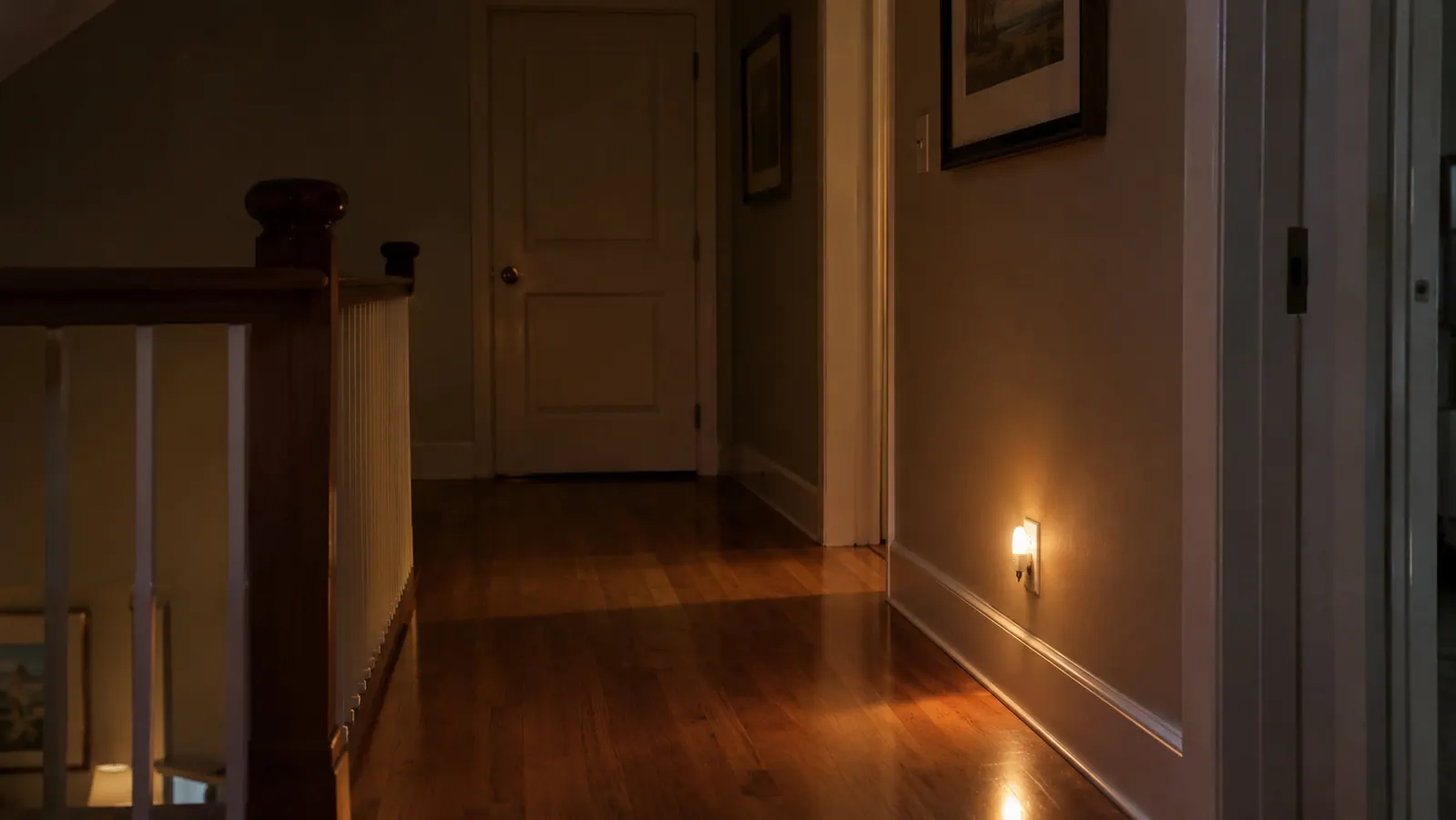
The upstairs pair is the important one. One sits in the hallway between my bedroom and the full bathroom. The other sits at the top of the stairs, so the short stair run down to the landing is lit from both ends. At night, that means the path from my pillow to the bathroom is lit the whole way, with no gap in the middle.
In the half bath, I do not need the motion sensor at all, because I only open that door when I am awake. But the dusk to dawn setting means it is ready the moment the sun goes down, and on a winter evening when I come in from the garage with my arms full, that little light is a welcome sight. It is the difference between fumbling for a switch and just walking in.
Setup took about ten minutes, one light per outlet, no tools, no instructions needed. I have not touched them since. That is the entire job description, and they have done it.
What the Motion Sensor Does That a Plain Night Light Can't
The night lights I grew up with had one setting: on. They sat in the outlet all night, glowing into the room, and if you wanted them off in the morning you crawled behind the dresser to unplug them. They worked, but they worked all night whether you needed them or not. The AUVON works on a schedule you never have to set.
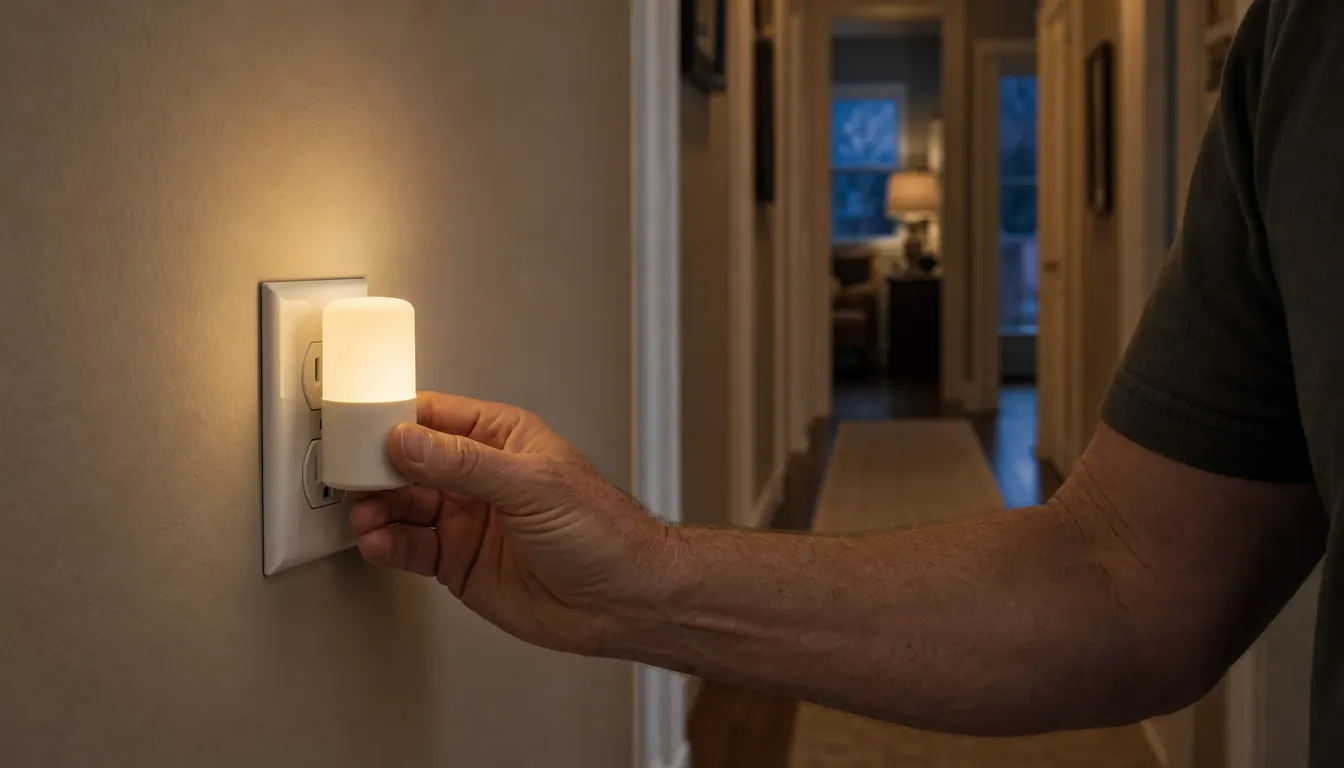
The motion sensor is the part that matters most to me. It does not just light the hallway. It lights the hallway at the moment I step into it. There is no switch to find and no button to press. I open the bedroom door and the path is already lit. For someone who has already taken one fall in the dark, that little head start is worth more than any other feature I could name.
The dusk to dawn sensor is the other half of the pair. It keeps the light off during the day, so a sunny afternoon walk past the outlet does not trigger a light show. At night, the motion sensor takes over. The two sensors together mean the light is on exactly when it should be and off the rest of the time. That is the whole trick, and it is a good one.
Six Months of Nightly Use
I am a skeptical reviewer. I half expected the sensors to drift, or the light to dim, or one of the four to die quietly in the first month. None of that happened. Six months in, all four work exactly as they did the night I plugged them in. The motion sensor still catches me from across the hallway. The dusk to dawn sensor still sleeps through the day. The light is still the same brightness it was in the spring.
The battery question is the one I want to underline. These are plug-in lights, so there are no batteries to fail at 2 AM. I have owned battery-operated motion lights, and they have a predictable failure mode: the battery dies in the middle of the night, which is exactly when you needed it. A plug-in light does not have that problem. It works because the wall works. The light also does not rush me. It stays on long enough for me to get from the bedroom to the bathroom, do what I came to do, and get back, without ever turning off mid-trip. I have never once been left in the dark because the light gave up on me. I cannot say that about every motion light I have owned.
My daughter Kate visits most weekends, and she noticed the lights before I mentioned them. That is the highest compliment a home-safety gadget can get: someone who does not live here noticed that the house feels easier to move through at night. She asked if they were new. I told her they had been there for months. She had simply never had to feel for a switch in the dark.
The only maintenance is dust. Every few months I wipe the face of the light with a dry cloth, because dust builds up on the sensor. That takes about ten seconds per light. And the one thing I did not expect is how much I appreciate the lights in summer. In winter, the dark comes early and the sensors have an obvious job. In summer, the sun is still up when I go to bed, and I thought the lights would be pointless. But the hallway still goes dark at 2 AM, and the motion sensor still does its job. The light does not care what season it is. It only cares whether I am there.
I have walked that hallway every night for six months, and I have not once reached for the overhead switch. The light is simply already on.
What Could Be Better
No product is perfect, and I would not be doing my job if I pretended this one was. The AUVON has one brightness setting, take it or leave it. It is a path light, not a reading light. If you want to read in bed, or see into the back of a dark closet, this is not the tool for that job.
You also need an outlet exactly where you need the light. On my stair landing, the outlet placement meant I had to choose which end of the short stair run to light, and I ended up using two lights to cover it. Before you order, look at your hallway and your stairs and note where the outlets are. The answer tells you how many lights you actually need.
One quirk I notice: if the bathroom door is open, the motion sensor in the hallway picks up movement in the bathroom and lights the hallway while you are in there. That is not a defect. It is just how a sensor works. Close the door, or enjoy the company.
And the honest limit. A night light does not catch a fall. It helps you see, which helps you avoid the fall in the first place. But if you have already fallen, or you feel unsteady, or you are recovering from surgery, the first conversation belongs with your doctor or a physical therapist, not with an Amazon order. I say this because my mother used a walker in her final years, and I learned the difference between helpful gear and the right medical advice. You want both.
What I Liked
- Lights the hallway before I reach it, so I never fumble for a switch
- Dusk to dawn sensor keeps it off all day, no schedule to set
- Plug-in design means no batteries to die at 2 AM
- Four lights in one box cover the whole path from bed to bathroom
- Six months in, all four still work exactly as new
Where It Falls Short
- One brightness setting, no dimmer
- Needs an outlet exactly where you need the light
- It is a path light, not a reading light
- The sensor can pick up movement from an open door in the next room
Alternatives I Considered
Before I settled on the AUVON, I tried the obvious alternatives. The cheapest is the classic night light that stays on all night. It works fine in a bathroom, where a constant glow is useful. In the hallway outside a bedroom, it is too much. It glows through the crack under the door, and it makes the room feel like a parking lot.
I also looked at battery-powered motion lights. They have one genuine advantage: you can stick them anywhere, with no outlet required. But they share one weakness: batteries. I did not want a light that could fail silently in the middle of the night. I wanted a light that was always ready, and that meant plugging it in.
The other name that comes up in every search is the GE motion night light, and I compared the two directly in my house. Both are good lights. The AUVON won in my hallway because of how its sensors handled the stairs, and the full comparison is written up separately if you want the details. For some layouts, I would send you to the GE instead. It depends on your outlets and your stairs.
Who This Is For
This is for anyone who gets up at night and does not want to turn on an overhead light. It is for older adults who want to stay in their own homes, a category I care about personally. It is for parents stumbling toward a nursery, for guests in an unfamiliar house, for anyone who has ever stubbed a toe on the way to the bathroom.
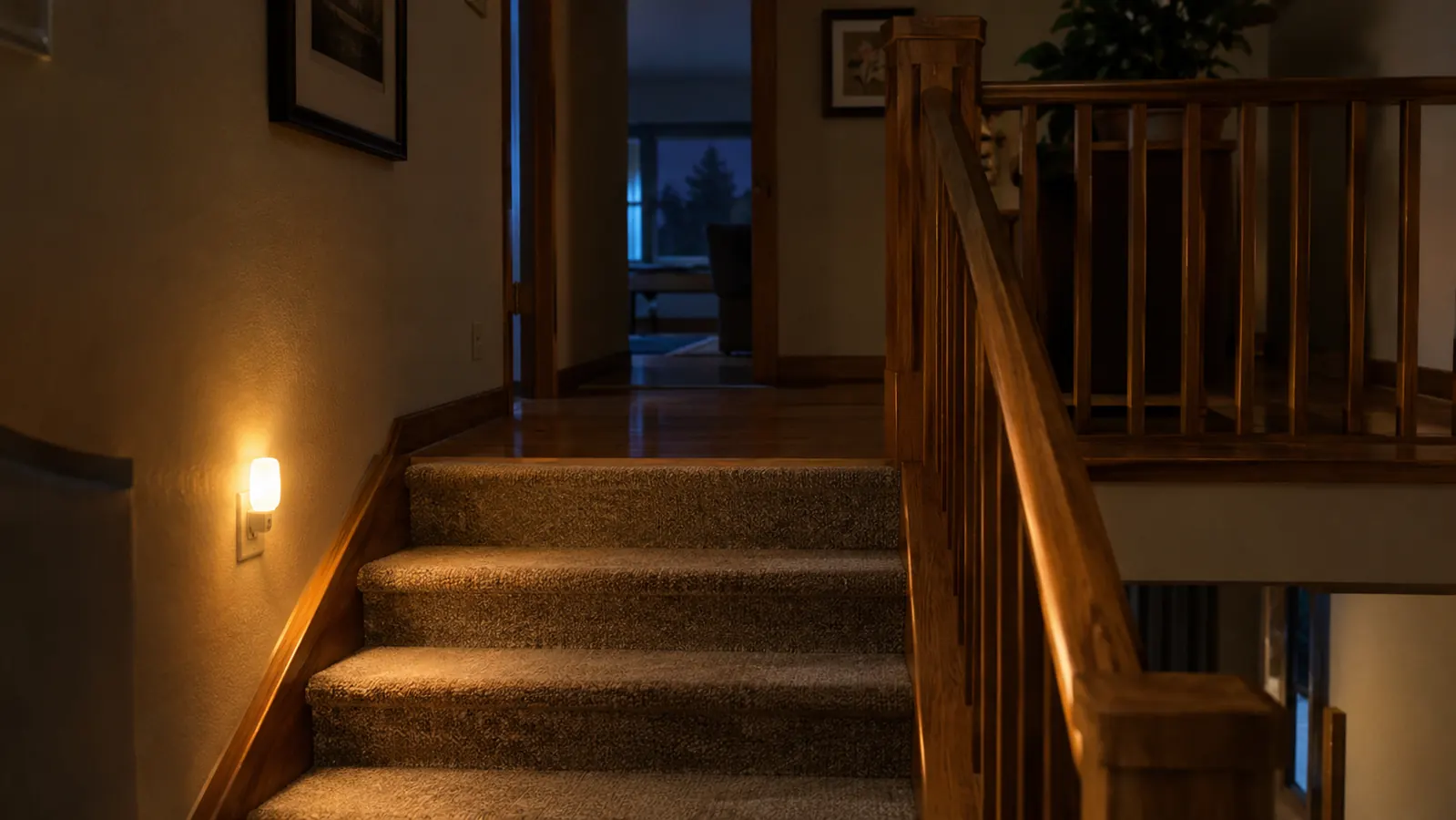
The stairs are where I notice the difference most. My split-level has short stair runs, and short runs are easy to misjudge in the dark because there is no long, straight flight to teach your feet where the edge is. With a light at the top and a light at the bottom, the edge of every step is visible before I commit my weight to it. That is the whole game for me.
And it is for the specific person I was two winters ago: someone who took a fall in the dark, got lucky, and decided never to rely on luck again. If that is you, start with the lights. Then have the conversation with your doctor about balance and strength. The lights handle the dark. The rest is worth doing too.
Friends who stay over have mentioned the same thing Kate did: they like not having to learn where the switches are in a strange house. Walking into a hallway that lights itself is a small kindness to a guest. For me, it is the difference between a house that feels like it is looking out for me and a house that just stands there. I also wrote a separate piece on why motion night lights prevent so many of those 2 AM falls. The short version is this: most falls happen in the dark, on the way to the bathroom, and a light that turns on before you need it removes the moment of hesitation that makes people skip the overhead light altogether.
Who Should Skip It
If you need a light you can read by, or if you want adjustable brightness, this is not it. One setting, one job. If your hallway or stairwell has no outlet where you need the light, you would be running extension cords, and at that point a battery light might serve you better.
And if you have already fallen, or you feel unsteady on your feet, or you are recovering from surgery or a hospital stay, please do not stop at a night light. Talk to your doctor or a physical therapist about balance, strength, and fall prevention. Ask about a properly installed grab bar for the bathroom. A night light makes the path visible. It does not make the path safe by itself. I want you to have both.
Make the 2 AM trip easier tonight
Four AUVON night lights cover the hallway, the stairs, and the bathroom in one order. Motion sensor, dusk to dawn, no batteries to change. See today's price on Amazon.
Amazon Check Today's Price on Amazon →