
Two winters ago, I put my hand on the wall of my tub and pushed myself up off the bathmat, and my feet went out from under me. The bruise on my hip took three weeks to fade. The scare took longer. I live alone in a 1962 split-level outside Hartford, my daughter Kate is an hour away, and after that slip I did the math most people my age eventually do: the bathroom is where independence goes to get hurt. I waited a week to tell Kate, mostly because I knew she would worry, and she did the useful thing. She asked what I needed, not what happened. So I spent the next months making my house safer, and the first room I changed was the shower.
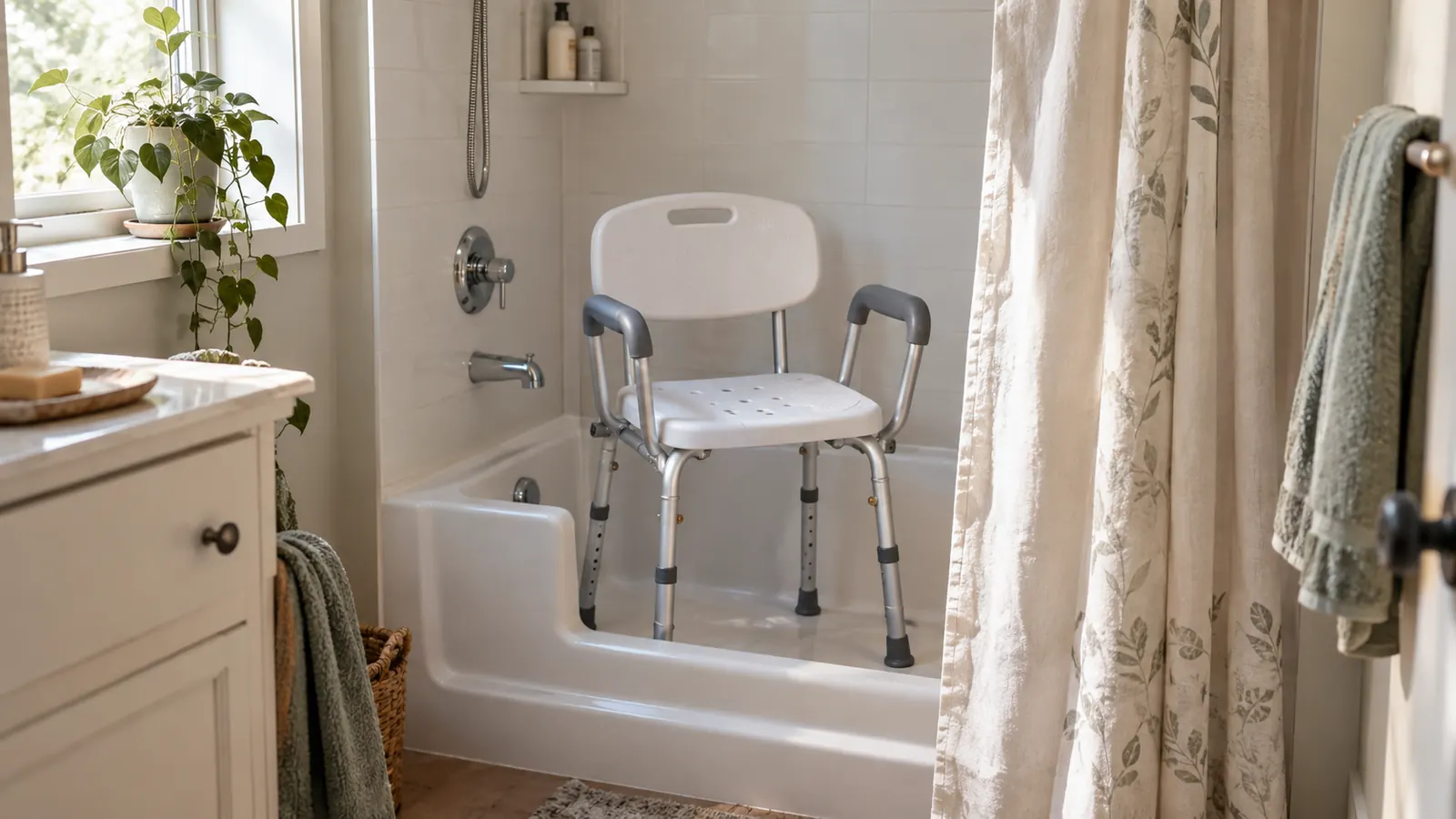
After a lot of comparing, I put a Medline shower chair in the tub upstairs. The padded armrests, the adjustable height, the slip-resistant feet, a back I can lean against without thinking: it did what I needed, which was let me wash my hair without gripping the wall. It has been there for nearly two years now, used once or twice a week, and it has outlasted my wariness. Below is the routine I settled on, step by step, the way I would walk you through it over coffee. No medical advice here, just what works in one 1962 bathroom.
The Shower Chair That Took the Fear Out of My Tub
I compared shower chairs for weeks before I chose the Medline, and it came down to the padded armrests, the back support, and a height that actually adjusts to the person using it. Check today's price on Amazon and read what other people over sixty have to say.
Amazon Check Today's Price on Amazon →Step 1: Set the Height Before You Set Foot in the Tub
Before you ever step into the tub with the chair, get the setup right, because the most important adjustment is the one you make before the water runs. Sit on the chair with your feet flat on the tub floor and your knees level with your hips, roughly a right angle. That geometry lets you stand up with your legs instead of pulling with your arms, and it is the difference between a chair you use and a chair you trip over.
As a starting point, set the seat about as high as a standard kitchen chair. But no two hips land the same in the same seat, so plan on adjusting and testing before your first real shower. The Medline's height is adjustable, which is what sold me: I wanted the seat exactly where my knees bent at a right angle, not wherever the factory guessed. I set mine and then sat on it fully dressed three times, in socks, just to be sure my feet stayed flat and my knees did not ride above my hips.
Position matters just as much as height. I angled mine so I sit facing the side wall, with the faucet at my shoulder. That leaves the shower curtain on one side and the tile wall on the other, so I always have something within reach to brace a hand against. And set the feet directly on the bare tub floor, never on a mat, because a mat under the chair will shift the way mats always do.
Step 2: Stage the Room Before You Undress
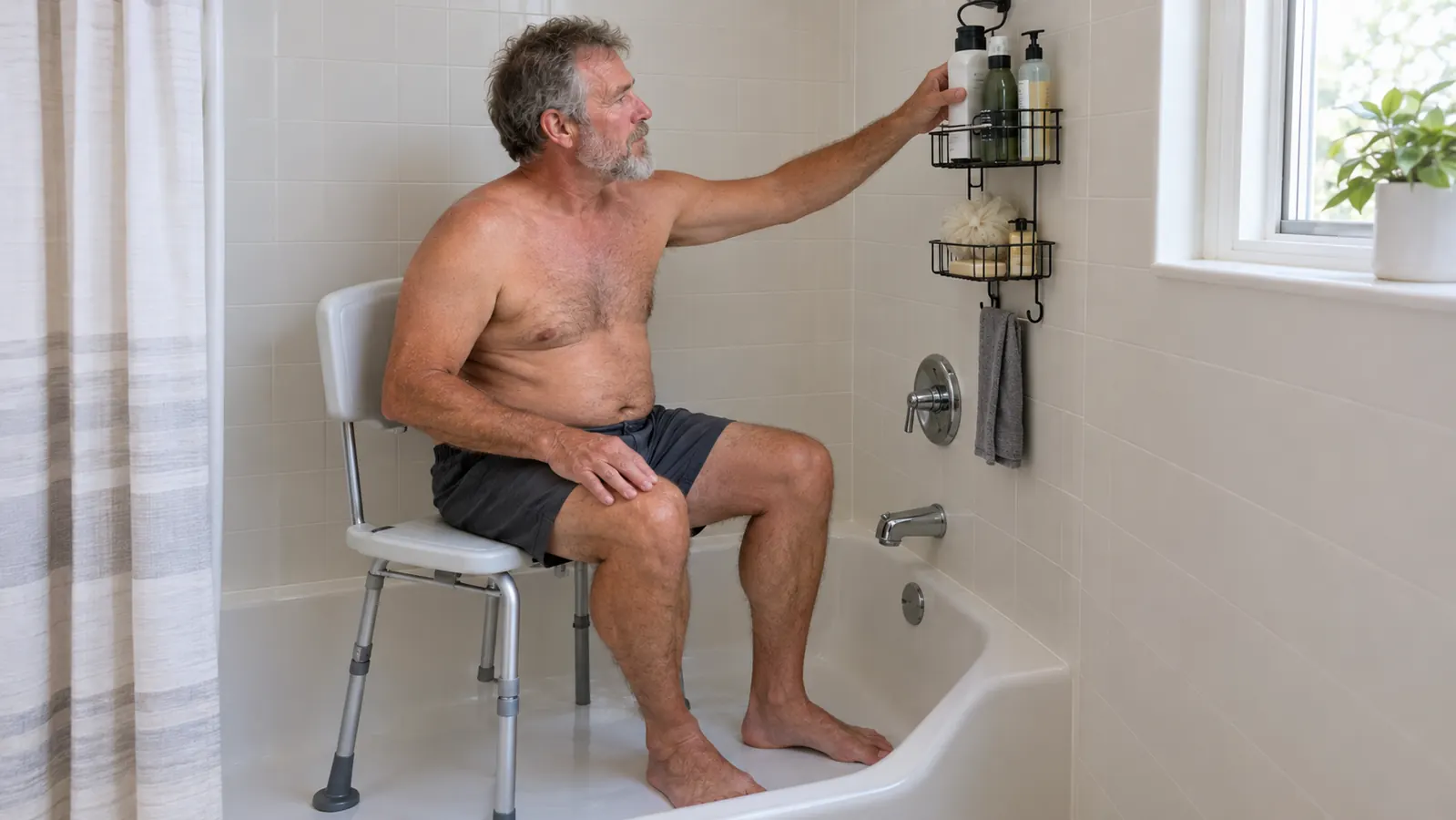
The riskiest part of a shower is rarely the shower itself. It is the reaching: the shampoo on the windowsill, the soap that rolled past the tub's edge, the towel hanging a step too far away. Before I get in, I stage the whole room the way a cook stages a counter. Everything I need already sits at shoulder height on the caddy I hung from the showerhead, including the washcloth, because I do not bend over for anything I can reach from the seat.
The floor outside the tub gets a bath mat with a rubber backing, and I make sure its corners lie flat so I cannot trip on them. The rubber bathmat inside the tub left after the first week, the day I understood that a wet mat on a wet tub is a slip in slow motion. I keep one towel on the bar and a second one folded on the toilet lid, close enough to grab without standing up.
I also run the water and let it warm before I step in. Cold water makes you tense, and tense is exactly how people slip. And I tell someone, because the house is quiet. Kate gets a text most mornings, and on the days nobody expects me, I leave the bedroom door open and my phone on the bathroom counter. It costs nothing, and it means nobody in my life has to wonder where I am.
Step 3: Get In and Out the Same Way Every Time
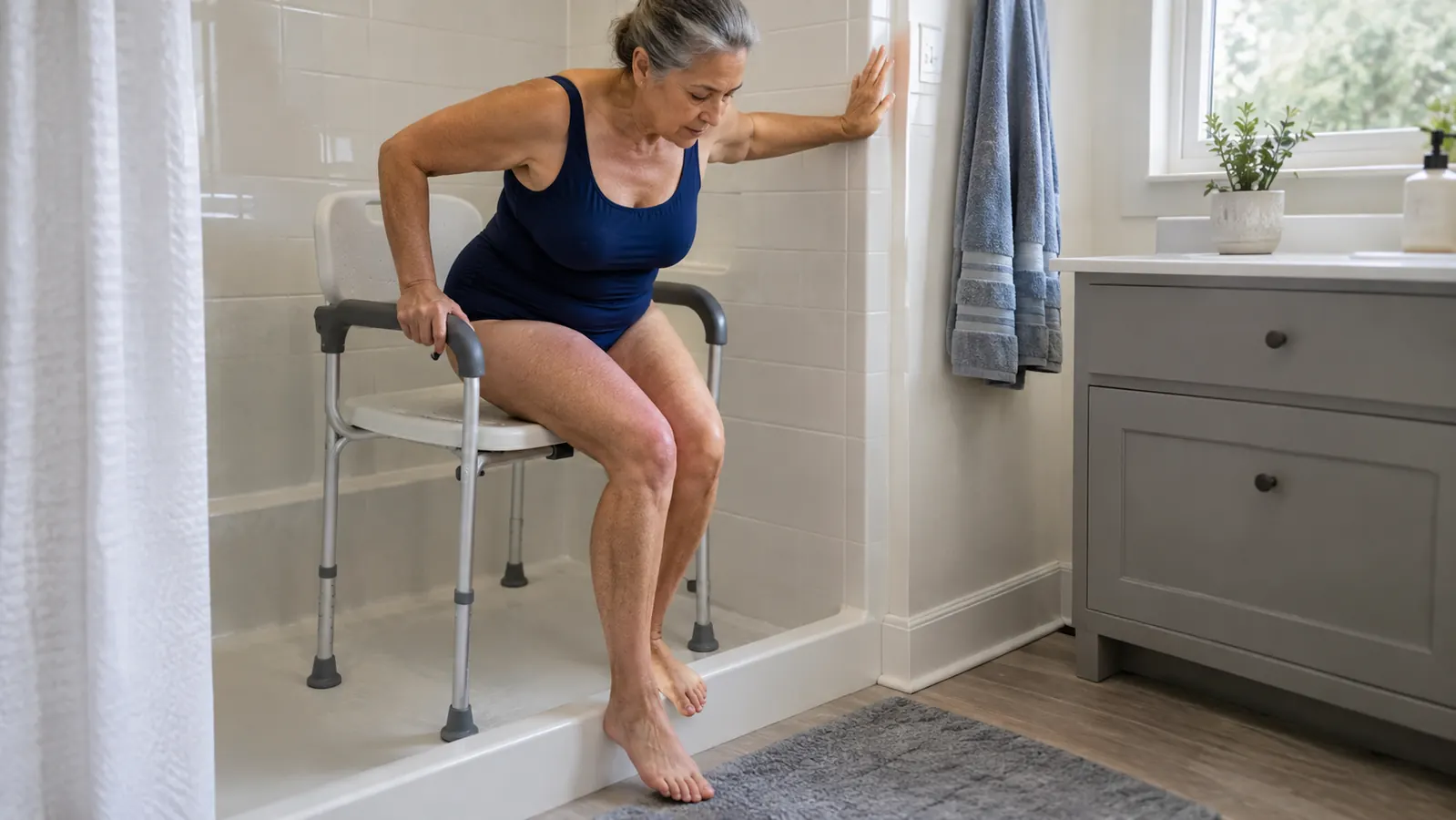
Most bathroom falls do not happen mid-shower. They happen at the lip of the tub, either stepping over the edge or stepping back out, and that is where I gave myself a rule: the same sequence, every shower, with no shortcuts when I am tired and no shortcuts when I am in a hurry. I step in with one hand on the wall, turn to face the chair, and reach for the armrest before I commit to sitting down.
Sitting down is a slow, deliberate move. I keep one hand on the wall, reach back for the near armrest with the other, and lower myself until my hips meet the seat. Then I bring my wall hand down to the far armrest before I settle back. The arms are padded for exactly this, so I use them. I do not drop the last two inches. I let myself down the whole way, because the drop is where a fall gets started.
Getting out is the other half of the rule, and it is the half that bit me two winters ago. I scoot forward until my feet are flat, press both hands into the armrests, push up to standing, and I do not let go of the armrests until both feet are planted and my knees are straight. Then one hand moves to the wall, then the other, and I step out facing the room, not the tub. Turning on a wet floor to step out is how I landed on my hip, and I am done with that particular trick.
Step 4: Wash From the Seat, Steady to the End
The point of the chair is that almost the whole shower happens while seated. I keep both feet planted on the tub floor, my back against the backrest, and I wash from my feet up. The warm water loosens my neck, I loosen my shoulders, and by the time I stand at the end I have already spent ten minutes being careful without having to remind myself to be.
The one reach I will not do is the long lean. If the caddy is out of reach, I move the caddy, not my spine. Twisting to grab something behind you on a wet tub is how grown people end up with bruised ribs and a story they do not enjoy telling. Keep everything at shoulder height, keep both feet flat, and if you own a hand-held showerhead, it is the best companion a shower chair has, because the water comes to you instead of you chasing it.
None of my routine is fancy. I wash my hair bending forward the smallest amount, I use a long-handled sponge for my back and legs, and I rinse by leaning gently side to side instead of twisting. It is not elegant. It is steady, and steady is the entire point.
Step 5: Dry Off Seated and Check the Chair's Feet
The oldest mistake in my house is the one I made for decades: stand in the tub, dry off, then step out onto a wet floor feeling clean and slightly off balance. Now I stay seated and pat my legs and feet dry while I am still on the chair, with my feet flat. I stand up only to pull on a robe and step onto the mat. Less water reaches the floor, fewer chances to slip, and no more balancing on one foot while I towel the other.
Once a week or so, I check the chair the way I would check the soles of my shoes. The slip-resistant feet on mine have held up through two years of use, but rubber is rubber and it wears, so I look at the tread. If it is flattening, I will deal with it before I need to, not after. I also rinse the chair down with the sprayer after my last shower of the week and wipe the frame with a damp cloth, which keeps it clean and gives me a built-in reason to look at those feet.
Most of all, I do not rush. The shower used to be the place I felt my age. Now it is just a shower. If I need to sit for a minute after I dry off, I sit. The chair does not care, and neither should I.
What Else Helps
A shower chair works best when it is not the only thing you change, and the second thing I added was a grab bar, which comes with a warning I want to say plainly. I use a suction-cup bar on the smooth tile beside my tub the way I use the chair: to steady myself, never to hold my weight. A suction bar is a balance assist, not a load-bearing grab bar. Never hang your full body weight on one, re-check the suction before every single use, and mount it only on clean, smooth, non-porous tile. If you need a bar that can actually catch a fall, you need one screwed into the wall studs, which is a different product and often a different installer. Do not let the two get confused.
The rest of my list is cheaper and quieter. A bath mat with a rubber backing outside the tub, the same one from step two. A hand-held showerhead if your tub does not already have one, because it lets you direct the water from the seat. Better lighting, so I can see the tub floor before my foot lands on it. And the caddy at shoulder height, so nothing I need lives below my knees or above my head.
And one thing no hardware store sells: if you have had a fall, if your balance is not what it used to be, or if you are coming off surgery, talk to your doctor or a physical therapist before you buy anything. A therapist can tell you the seat height and bar placement for your body better than any product description can. I am not a clinician. I am a retired office manager who got tired of being scared of her own bathtub, and the routine above is the one that let me put the scare down.
Nearly two years, two New England winters, and not one slip since the chair went in the tub. That is the only review that matters to me.
Your Bathroom, Your Rules
A shower chair is a small change with a big job: it keeps the shower yours. The Medline I chose has padded armrests, an adjustable height, slip-resistant feet, and a 350-pound capacity, and it has carried me through two years of weekly showers. If you are weighing one, check today's price on Amazon and read the reviews from people who actually step into a tub with it.
Amazon Check Today's Price on Amazon →