
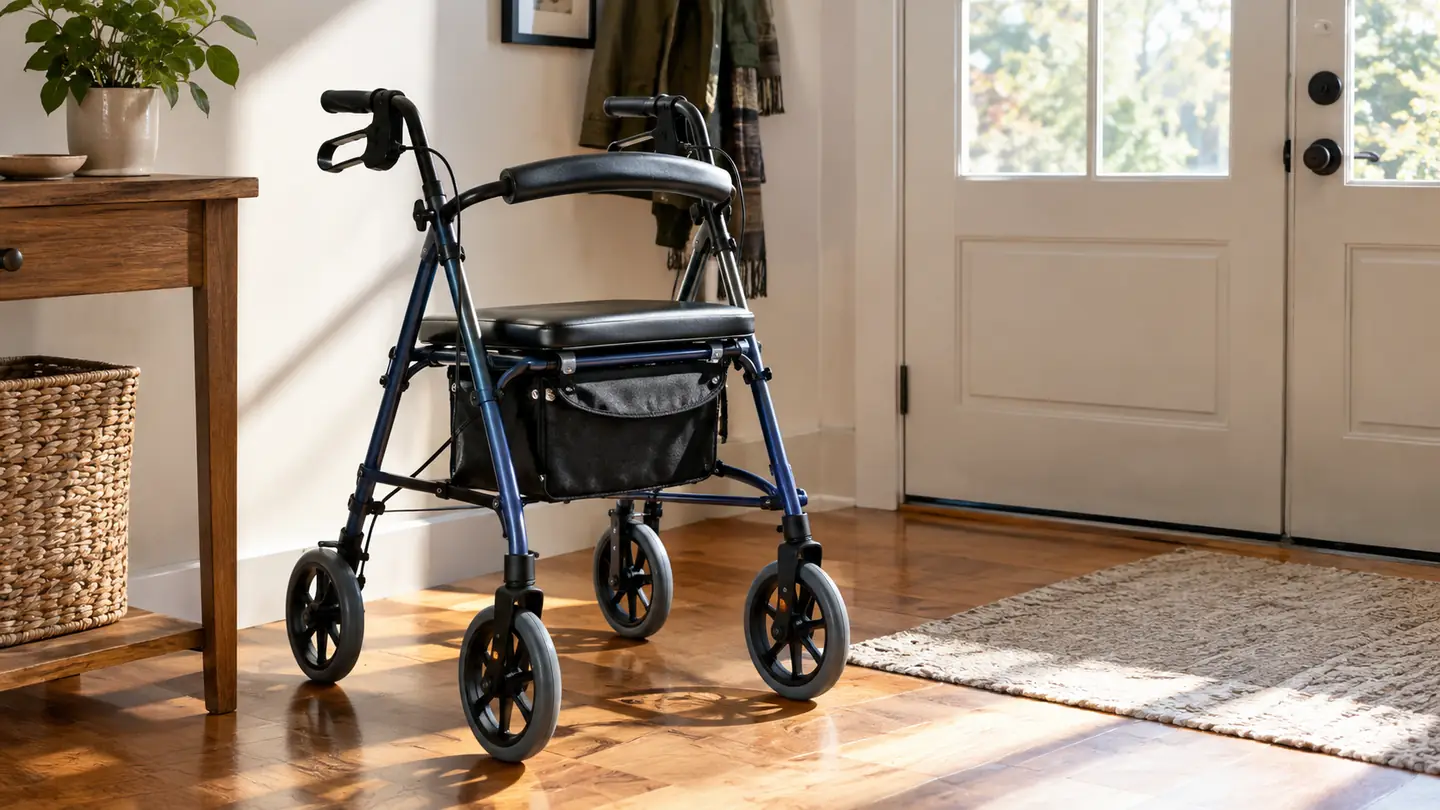
The rollator sat in the back of my coat closet for two weeks before I opened the box. My daughter Kate brought it over on a Saturday, cheerful and practical the way she gets, and I thanked her and set it by the stairs and ignored it. I told myself I was pacing myself. The truth is I looked at that walker and saw my mother's last years, the slow shuffle from the recliner to the bathroom. I thought, if I start using one of these, I have given up.
What changed my mind was not a talk from Kate. It was a morning walk. I do the same loop most days, out the front door and around the block, and that particular morning I stopped twice to catch my breath and once because my balance felt off on a cracked patch of sidewalk. Nothing dramatic. Just enough to make me pay attention. I came home, opened the box, and took the Drive Medical rollator for a slow lap down the hall. Halfway down I realized my hand had not touched the wall once. That is how I met the thing I had been hiding from.
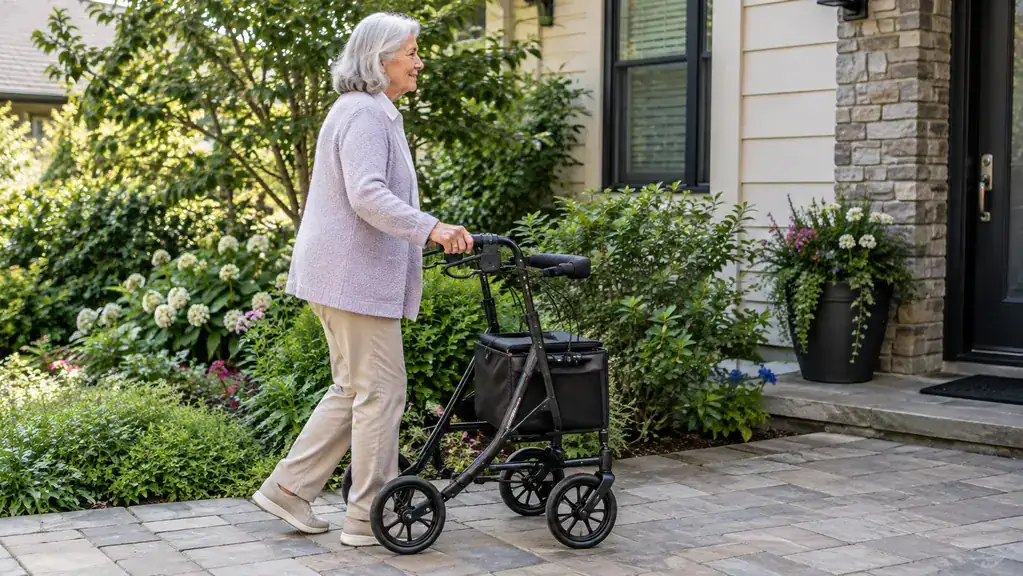
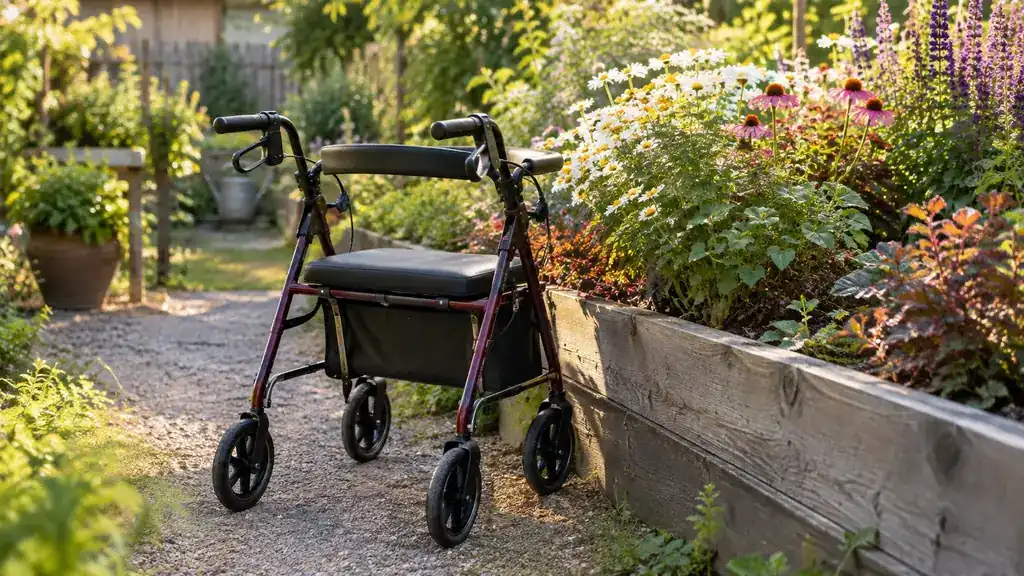
It rolls, first of all. I knew it rolled, I had read the box, but knowing a thing and feeling it under your own hands are different. The front wheels are seven and a half inches, which sounds like a spec and turns out to mean the curb at the end of my front walk does not stop it. The seat is the part I did not expect to use. I set it up beside the garden beds when my knees ask me to stop, and I sit and look at the flowers and finish weeding five minutes later.
Two weeks in the closet, then every morning since, the same loop and the same sidewalk and a body that makes it without the extra pauses. I still walk to the library on good days and to my twice-weekly strength class at the senior center. Nothing about my routine shrank. What got smaller was the fear that one unsteady step would end it.
Here is what I would want someone to know before they order one, because I did not know it: the Drive Medical rollator does not fix your balance, and it does not climb the short stair runs in my split-level. I still hold the railing on the steps, and I still have a hand on the counter when I get out of the shower. If your balance is genuinely going, or you have had a fall, that is a conversation for your doctor or a physical therapist, not an Amazon order. This is the tool that keeps me out on the block. It is not a treatment for anything.
Halfway down the hall I realized my hand had not touched the wall once.
The rollator that sat in my closet for two weeks
It is the Drive Medical rollator with the seat and the seven and a half inch wheels, rated 4.6 stars across more than 51,000 reviews. Today's price is on the Amazon page, and the customer reviews underneath it are worth your time before you decide.
Amazon Check Today's Price on Amazon →The honest list of what it does well: the brakes are the kind you squeeze, and they hold on a slope, which matters because the sidewalk out front tilts toward the street. The seat turns a long aisle into a place I can rest, and I have used it at the farmers market, the town library, and the senior center. The Drive Medical folds down and goes into the back of my 2015 Subaru Forester without a fight. It goes where I go.
The honest list of what it does not do: it is heavier than a cane, and the first few times I lifted it into the car I muttered about it. It is wider than a cane, so the hall felt narrow for about a day until I learned to let it lead. It does not do stairs, full stop. And it does not make me fall-proof. I still take the railing when there is one, and I still put my hand on the counter when I step out of the tub. Steadier is not the same as safe, and I do not pretend otherwise.
The thing nobody tells you is how it changes the room you are in. People move out of your way at the grocery store, doors get held, clerks ask if you need a hand. I found that embarrassing at first and I find it restful now. My mother hated that part of her walker in her last years, and I understand her better these days. The walker was never the surrender. The surrender would have been staying on the couch because I was afraid of the sidewalk.
Kate noticed before I said a word. She came for Sunday dinner, saw the rollator by the front door instead of in the closet, and said nothing. She just gave me a hug. It told me she understood what it had taken me two weeks to learn: the walker is not the end of independence. It is the tool that keeps it.
What I'd Tell You If We Were Sitting at My Kitchen Table
If you were here, coffee in a mug I have forgotten the pattern of, I would say it plainly. A rollator will not keep you young, and buying one does not mean you quit. It means you noticed the sidewalk got harder and you decided to keep walking it anyway. Talk to your doctor or a physical therapist first if you have had falls or if your balance worries you, because some things need a professional eye. Then, if they give you the green light, get a good one, with wheels that clear the cracks and a seat you will actually use, and give it a real chance past the first proud week. Two weeks from now you will reach for it without thinking. That is not giving up. That is getting to keep your mornings.
If you are still on the fence, start where I did
You do not have to love the idea of a rollator on day one. I did not. You only have to let it help on the walk where the sidewalk feels unsteady. The Drive Medical rollator is on Amazon, the price there is today's price, it can go back if it is not the right fit, and the reviews are full of people who took the same two weeks I took.
Amazon See the Drive Medical Rollator on Amazon →