
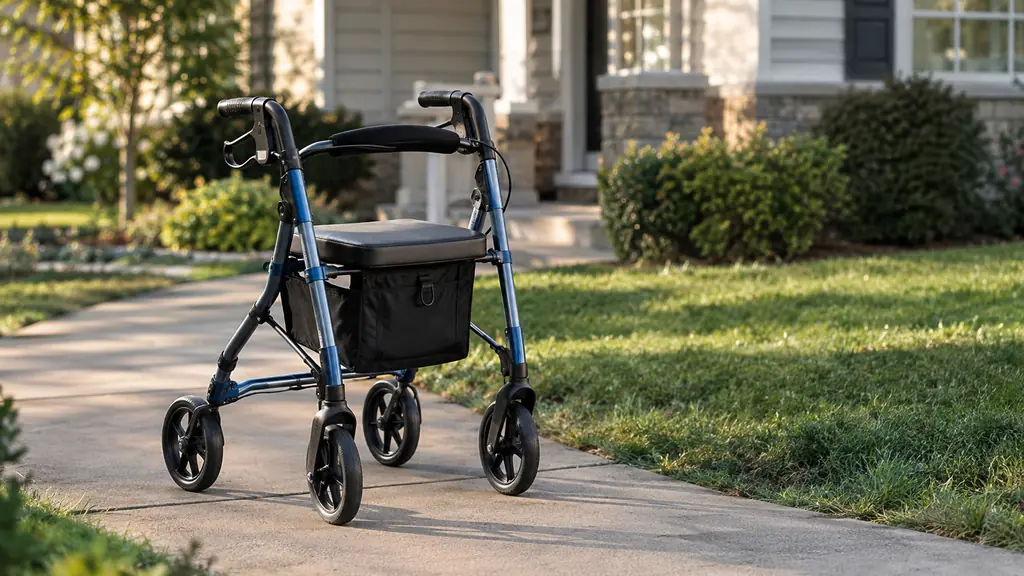
I bought my Drive Medical rollator about a year ago, and I have strong opinions about it now. That is the honest part. The internet is full of five-star reviews written the day the box arrived. Nobody tells you what it is like to live with a rollator for twelve months, to fold it into a car a hundred times, to take it through a narrow doorway, to watch it sit in the corner on days you do not want to need it. So here is the review I wish I had read before I ordered mine.
I am Marjorie, I am 67, and I live alone in a split-level house outside Hartford. Two winters ago I slipped getting out of the bathtub and bruised my hip badly enough to scare me. My doctor was clear: I did not need a walker full time, but I did need something to lean on for balance on uneven ground and for longer walks. I spent a month comparing rollators, and I kept coming back to the Drive Medical because it had the features I wanted at a price I could live with. A year later, here is what I actually think. I have no reason to flatter this rollator. I bought it with my own money, I have used it in the rain and the sun, and I have watched it sit in the corner on days when I was angry that I needed it at all.
The Quick Verdict
A sturdy, no-nonsense rollator that does its job well. It is not glamorous, the seat is not a lounge chair, and the brakes need a firm hand. But after a year of daily use, it still rolls smoothly, folds easily, and gives me the confidence to keep walking. That is what I needed it to do.
Amazon Check Today's Price →The rollator I trust for my daily walks
After a year of using it around the house, in the car, and on the sidewalk, this is the one I recommend to friends who ask. Check today's price on Amazon and see if it fits your routine.
Amazon Check Today's Price on Amazon →How I've Used It
I have used this rollator every single day for a year, and I mean every day. Most mornings I take it on my walk around the neighborhood, about a mile and a half. My usual route starts at my front door, down our street past the Andersons' house, around the little pond at the end of the cul-de-sac, and back up the hill. On a good morning I do the whole loop without stopping. On a stiff morning, I stop once or twice and sit on the seat for a few minutes before I head home. I use it in the house when my hip is feeling stiff, which happens more than I would like, especially after I have been on my feet at the senior center. I take it to the grocery store, to the senior center for my twice-weekly strength class, and to my daughter Kate's house when I visit. It has been in and out of my 2015 Subaru Forester more times than I can count.
The Drive Medical rollator has 7.5 inch wheels, which is the size most people should look for. The smaller 6 inch wheels on cheaper rollators are fine for indoor use, but they catch on every crack in the sidewalk. The 7.5 inch wheels roll over expansion joints, pebbles, and the occasional twig without stopping me. Last fall I walked over a patch of gravel near the mailboxes and did not even slow down. That matters more than you think when you are trying to walk with confidence.
I also use the seat more than I expected. I thought I would only sit on it when I was tired, but I have learned to sit on it before I get tired. There is a bench at the far end of my walk, but it is not always empty, and some days the sun is in the wrong place to sit there anyway. Having a seat with me means I can stop whenever I need to, catch my breath, and continue on my own schedule. That independence is the real reason I bought it. Last month I walked to the farmers market, about a mile each way, and I sat on the seat twice on the way home with a bag of apples and a loaf of bread in the pouch. I would not have made that walk without it.

What Nobody Tells You Before You Buy
Here is the first thing nobody tells you: the seat is not comfortable for long sits. It is a firm plastic seat with a thin pad, and it is fine for five minutes of resting. It is not fine for sitting through a long conversation or a picnic. Last spring Kate and I went to a garden party at her neighbor's house, and I sat on the seat for maybe fifteen minutes while we talked. I was ready to stand up long before the conversation wound down. I have also sat on it for twenty minutes at a time while waiting for Kate, and I was glad to see her car pull in. If you need a rollator with a seat you can sit on for extended periods, look for one with a thicker padded seat. The Drive Medical is a rest stop, not a chair.
The second thing nobody tells you: the brakes require a firm hand. The rollator has push-down brakes, which means you squeeze the handles and push down to lock them. When the brakes are adjusted correctly, they work well. But they need to be adjusted periodically, and if your hands are weak, you will find them hard to engage. In January I noticed the left brake was not holding as well as it used to, so I found the adjustment knob, turned it a quarter turn, and tested it in the hallway. It took about five minutes. My hands are fine, but I have had friends with arthritis try it and struggle. If you have hand weakness, test the brakes before you buy, or ask your physical therapist for advice.
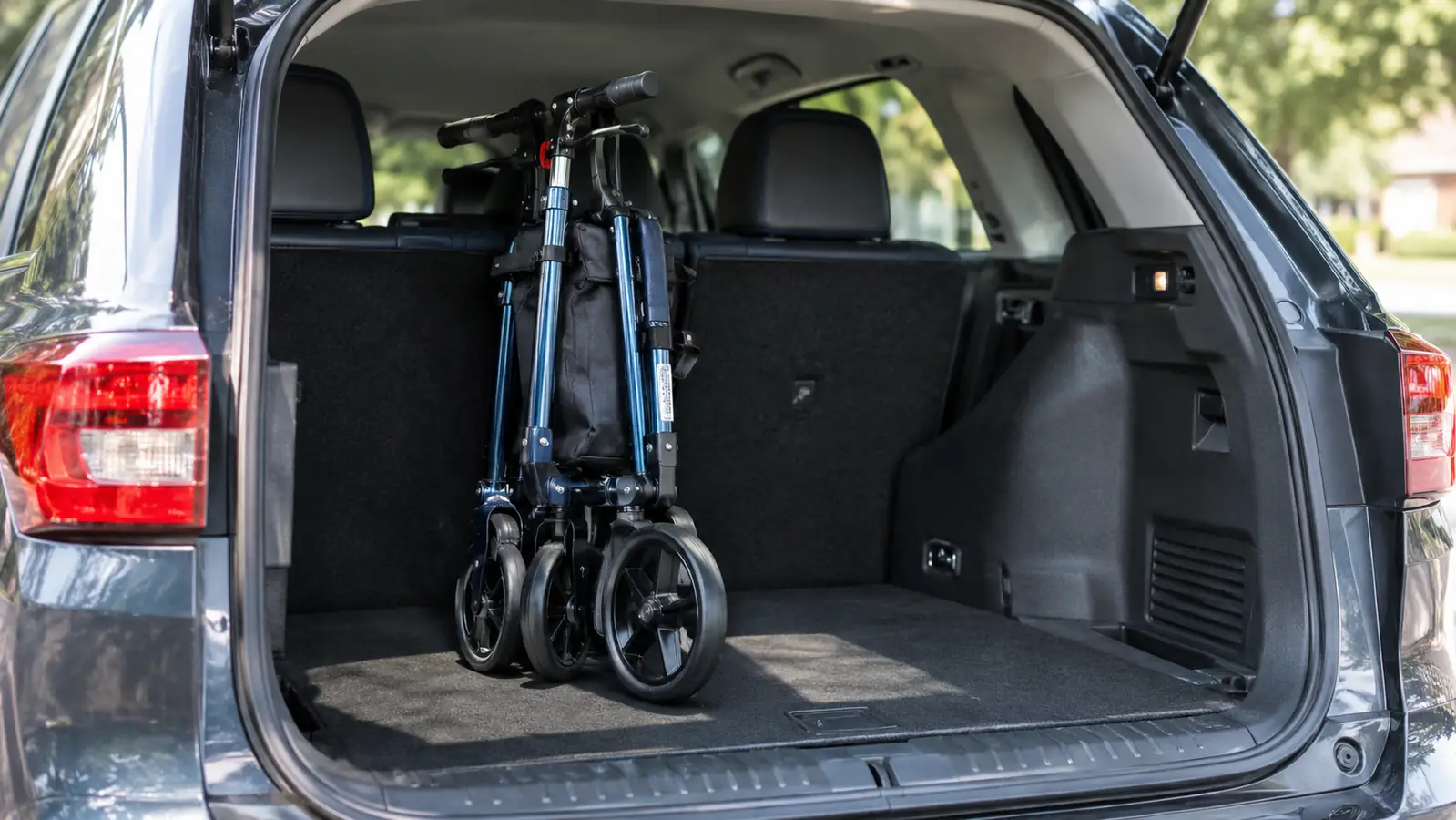
The third thing nobody tells you: you will fold this thing more than you think. I fold mine to put it in the car, to store it in the closet, and to get it through narrow spaces. The folding mechanism on the Drive Medical is simple: pull the strap, and it folds. It takes about five seconds once you get the hang of it. But the first few times, it feels awkward. The first time I folded it in the grocery store parking lot, a young man offered to help because I looked like I was wrestling it. Now I can do it without thinking, even one-handed while I hold my purse. You have to pull the seat up and the frame together, and it takes a bit of practice. Do not let that discourage you. It becomes second nature quickly.
The seat is a rest stop, not a chair. I learned that the hard way at a garden party.
The Good, the Bad, and the Honest
Let me be fair. The Drive Medical rollator has a lot going for it. The frame is sturdy. I weigh about 150 pounds, and the rollator supports up to 300 pounds, so I never worry about it giving way. The wheels are smooth, the handles are comfortable, and the height adjusts easily with a simple push-button mechanism. I am 5 foot 4, and I set the handles to the second-lowest hole when I first got it. That took about two minutes, and I have not needed to touch it since.
The storage pouch is another pleasant surprise. It hangs on the front of the rollator and is big enough for a small purse, a water bottle, and a light jacket. I use it every day. On a recent visit to Kate's it also held a loaf of banana bread and a paperback book. It is not waterproof, so I do not keep anything important in it when it rains, but for everyday errands it is perfect.
The downsides are real but manageable. The rollator is not light. It weighs about 17 pounds, which is average for this type, but you will feel it when you lift it into a car. I have learned to lift with my legs and to fold it before I lift it, which makes it easier. I grip the frame at the balance point, bend my knees, and lift in one motion. On days when my hip is grumpy, I lower the trunk lid partway and slide it in rather than lifting it high. If you cannot lift 17 pounds, you may want a lighter rollator, though lighter usually means less sturdy.
The width is also something to consider. The rollator is about 24 inches wide, which fits through most standard doorways, but just barely. Before I ordered it, I went through the house with a tape measure: 30 inches in the front hallway, 28 inches in the bathroom door, 26 inches in the half bath downstairs. The rollator clears all of them, but I do have to angle it slightly through the narrowest ones. It is not a problem, but it is worth knowing before you buy. Measure your doorways first.
What I Liked
- Sturdy steel frame that has not wobbled in a year of daily use
- 7.5 inch wheels roll smoothly over sidewalk cracks and gravel
- Folds flat in about five seconds once you learn the motion
- Seat is always there when you need a rest mid-walk
- Height adjusts in minutes with push-button pins
- Storage pouch holds a purse, water bottle, and light jacket
Where It Falls Short
- Seat is firm and thinly padded, fine for a few minutes only
- Brakes need a firm grip and periodic adjustment
- Weighs about 17 pounds, noticeable when lifting into a car
- 24 inch width just barely clears narrow doorways
- Pouch is not waterproof
How It Holds Up Over Time
After a year of daily use, I can report that the Drive Medical rollator holds up well. The wheels still roll smoothly, the brakes still work, and the frame has no wobble. I have not had to replace any parts, which surprises me, because I expected the wheels to wear out or the brakes to need constant adjustment. The brakes have needed adjustment twice, once in January and once in July, and both times it was a five-minute job. That is normal for this type of brake.
The one thing I have noticed is that the paint on the frame has a few small scratches from being folded and unfolded and from rubbing against the metal lip of the car trunk. That is cosmetic, not structural. I put a folded towel under it in the trunk now, and the scratches have not gotten worse. The frame itself is solid. I am not gentle with it, and it has held up to my abuse.
I have also washed the seat and the pouch. The seat wipes clean with a damp cloth, and the pouch is machine washable, though I have only done that once, in the spring, on the delicate cycle. It came out fine. For something that lives in a car trunk and gets rained on occasionally, it has aged well. The wheels have picked up a few small pebbles in the treads, but nothing that affects how it rolls.
Who This Is For
This rollator is for you if you want to keep walking, keep going to the store, keep visiting friends, and keep living your life, but you need a little extra support to do it. It is for people who are steady enough to walk without holding on all the time, but who want something to lean on when they are tired or on uneven ground. It is for people who like the idea of a seat that is always with them, so they never have to skip a walk because they are afraid they will not make it back.
It is also for people who value simplicity. The Drive Medical rollator does not have a lot of bells and whistles. It does not have a basket that detaches, it does not have a backrest that reclines, and it does not have fancy shock absorbers. What it has is a sturdy frame, smooth wheels, a seat, and a pouch. For most people, that is enough. I have never once wished it did more than it does. In fact, I have learned to prefer the simple things, because there is less to break and less to figure out.
Who Should Skip It
You should skip this rollator if you need a seat you can sit on for long periods. The seat is firm and thin, and it is not designed for extended sitting. If you want to sit through a full meal or a long wait at the clinic, you will be uncomfortable. You should also skip it if you have significant hand weakness, because the brakes require a firm grip. And you should skip it if you need a rollator that is very light, because 17 pounds is not nothing, especially if you have to lift it in and out of a car several times a day.
If you have had a recent fall, if you are recovering from surgery, or if you have balance problems that make you unsteady even with support, please talk to your doctor or a physical therapist before you buy any rollator. They can help you figure out what you actually need. A rollator is a tool, and the right tool depends on your specific situation. I am not a medical professional, and I do not want you to rely on my experience alone.
Alternatives I Considered
Before I settled on the Drive Medical, I looked at a few other rollators. I considered a lighter model that weighed about 12 pounds, but it felt flimsy when I tested it in the store. The frame twisted when I leaned on it, and that was the end of that idea. I considered a rollator with a larger seat and a backrest, but it was wider and did not fit through my hallway. I measured it in the store against the 24 inch width of the Drive Medical, and it was not even close. I even considered a transport chair, but I do not need to be pushed, and I wanted to walk, not be wheeled. My physical therapist reminded me that the goal was to keep moving, not to make moving unnecessary.
In the end, the Drive Medical was the right balance of weight, width, and sturdiness for me. It is not the lightest, it is not the most comfortable, and it is not the prettiest. But it is the one I have used every day for a year, and it has never let me down. That is worth more than any spec sheet.
Still wondering if it is right for you?
The honest answer is that no rollator is perfect, but this one has been good enough for me to use every day for a year. If you want to see today's price and read more owner reviews, the link is below.
Amazon Check Today's Price on Amazon →