
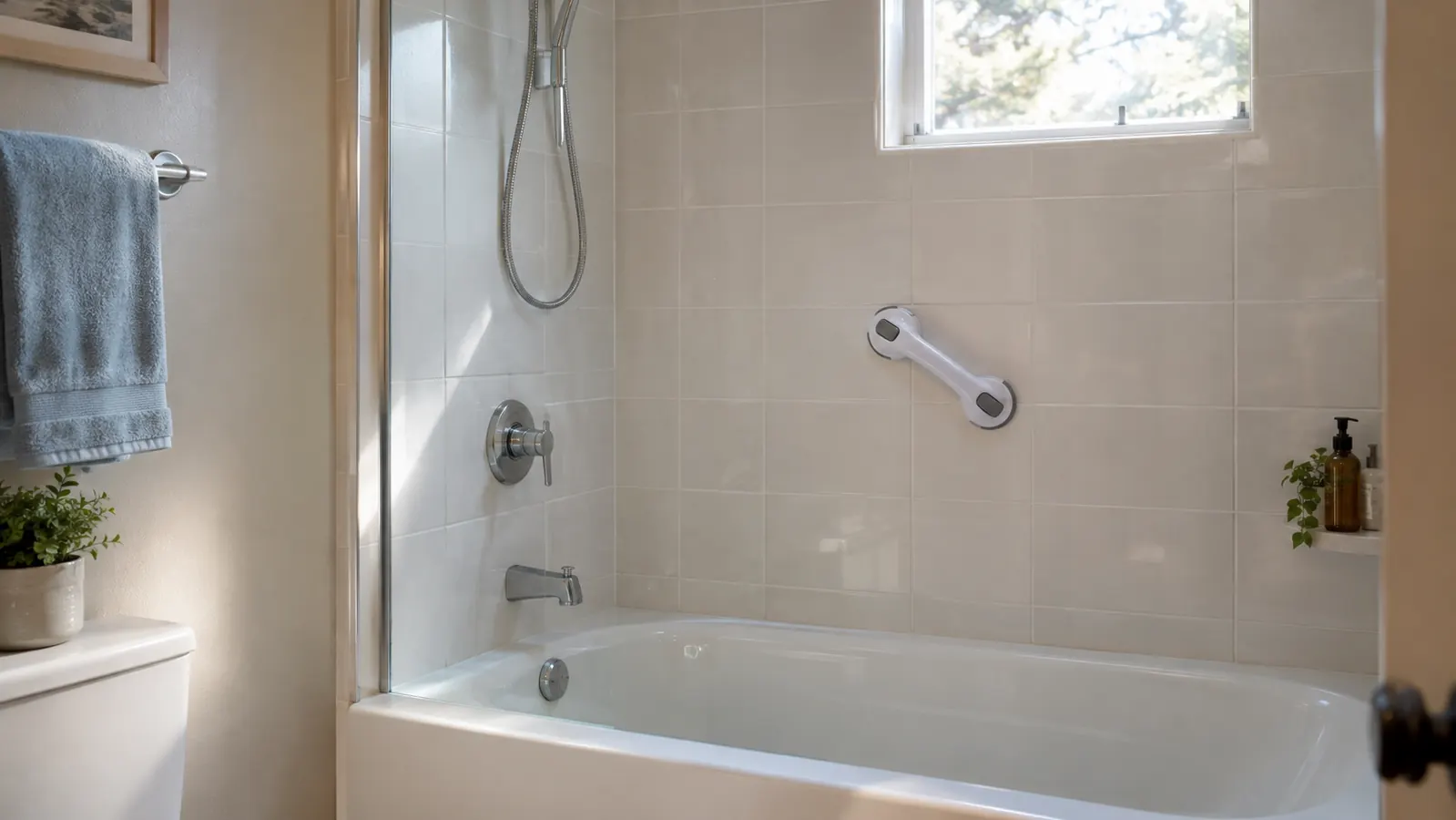
Two winters ago, I stepped out of the tub and my foot slid on a damp bath mat. I caught the edge of the sink, but my hip hit the cabinet hard enough to leave a bruise that took two weeks to fade. That was the moment I stopped telling myself I was too young for grab bars. I am Marjorie, I am 67, and I live alone in a 1962 split-level outside Hartford, Connecticut. The upstairs bathroom has a tub-shower combo and a floor that gets slick no matter how careful I am. The TAILI suction grab bars I added last fall are a big reason I can still start my morning shower without holding my breath.
I am not a contractor or a physical therapist. I am a retired dental office manager who spent the past year testing different kinds of bathroom support in my own house. What surprised me was how much of it came down to placement and habit, not fancy hardware. A grab bar only helps if your hand can find it when you need it, and only if you trust it to do exactly what it is designed to do. This guide is the practical version of what I learned. I will walk you through the steps, and I will be honest about where a suction bar is not enough.
The grab bars I keep in my own shower
I use TAILI Suction Grab Bars, a 2-pack of 16.8-inch handles that attach to smooth tile without drilling. They give me a steadying hand while I wash my hair and turn around. See today's price and current options on Amazon.
Amazon Check the TAILI Suction Grab Bars on Amazon →Step 1: Watch yourself move around the bathroom
Before you buy anything, stand in your bathroom and move the way you normally do. Where does your hand land when you step into the tub? Where do you reach when you turn to face the showerhead? Which wall do you grab when you step out onto the floor? Those are the spots that need support. I made the mistake of mounting a bar where it looked good from the doorway, then discovered I had to bend sideways to use it.
For me, the hardest spot was turning around inside the tub. I needed a handle on the back wall, about shoulder height, that I could reach without twisting my back. I also wanted something near the front edge of the tub to hold while I stepped over the side. I made a list of three positions: one inside the shower, one at the tub edge, and one by the towel rack for when I was drying off. The list sounds like a lot, but you do not need all three on day one. Start with the one that makes you nervous.
You can test a position before you commit. Tape a paper towel tube or a rolled washcloth to the wall at the height you think works, then move around. Adjust until your hand naturally finds it without you looking. That is the height that will actually get used. The same goes for the angle. Some people like a vertical bar to pull on, others want a horizontal rail. I found a slight angle, maybe 20 degrees, felt best for my shoulder. Do not overthink it. Your body will tell you what it needs.
Step 2: Choose suction bars for balance, not for catching a fall
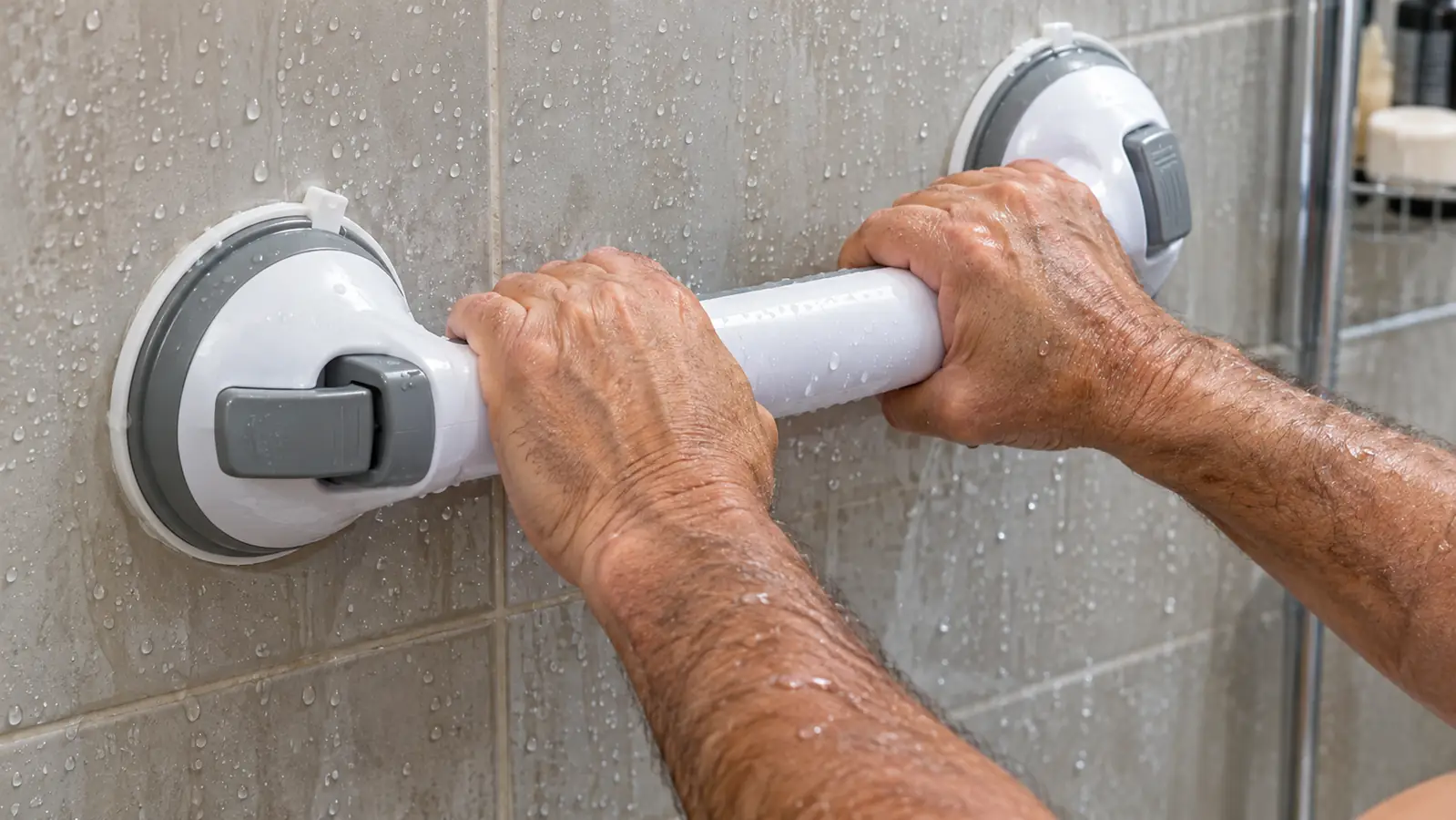
Pick the right tool for the job. TAILI's suction grab bars are designed to give you something to steady yourself on while you wash your hair, shave your legs, or turn around. They are not meant to catch you if you lose your footing and fall. No suction bar is. The surface it grips, usually a smooth tile wall, is too slick and too easy to detach under a sudden heavy pull. If you hit the bar hard with your whole body weight, it can pop off. That is physics, not a flaw.
Think of a suction grab bar as a steadying hand, not a rescue rope. If you have a tendency to fall, or if you are recovering from surgery, or if your doctor or physical therapist has told you to use a grab bar for balance safety, then the right choice is a bar that screws into the wall and anchors into the studs. That kind can take your full weight. A suction bar is for keeping your balance, not for catching you. I use my TAILI bars for balance support in the shower, and I keep a screw-in bar by the toilet. Each one has a different job, and I know which is which.
This is not a warning to scare you. It is the difference between gear that helps and gear that gives you a false sense of confidence. The day I first installed my TAILI bars, I tested them with a careful lean, not a full fall. I also made a rule: I never put my full weight on them, and I never use them to pull myself up from the floor. That rule has kept my bathroom safer and my mind more comfortable.
Step 3: Check your tile and clean the surface before you stick anything
Suction bars only work on smooth, non-porous tile, and only when the tile is clean. No grout lines, no texture, no paint that is peeling. If your bathroom has that flat white subway tile, or large-format porcelain, you are likely fine. If you have rough stone, matte ceramic, or old tile with a porous finish, the suction cups will not hold the way you need them to. My own bathroom has large porcelain tiles that have been there since the 90s, and they are smooth enough for the suction cups to grip.
Clean the tile with a degreaser or rubbing alcohol and let it dry completely. I use a microfiber cloth and a little white vinegar, then wipe it once more with a dry towel. The suction cup needs a spotless, dry surface to seal. Even a thin film of soap scum will let the bar slide down the wall eventually. I learned this the hard way when my first bar slipped after three days because I had skipped the alcohol step.
Check the suction cups themselves too. Press your thumb into the center and make sure the cup is soft and flexible. If a cup has a crack, a stiff edge, or a piece of debris trapped inside, replace it before you trust it. The TAILI bars come with a rubber cup that presses flat against the tile, and you will hear a small click when it seals. That click is your reassurance that the cup has made full contact.

Step 4: Mount the bar where your hand naturally goes, and test it before you rely on it
Positioning matters more than the strength of the suction. A strong bar mounted 6 inches away from where your hand reaches might as well not be there. Stand in your shower, hold your arm out at a comfortable angle, and mark that spot on the tile with a piece of painter's tape. Then mount the bar so the gripping surface lands right in that palm zone. For me, that meant the bar needed to be almost directly above the tub faucet, not off to the side where my hand would have to search for it.
Place the bar a little higher than you think. Most people aim for about shoulder height or just above hip height when they are standing. The exact number depends on your height and what you are doing. When I tested mine, I raised the bar twice before it felt natural. I am 5 foot 4, and the final position put the bar around chest height so I could rest my hand while I was standing under the water. My daughter Kate, who is taller than me, found that height comfortable too, which tells you that you have some wiggle room.
Press the suction cups firmly against the tile. Push from the center of each cup outward, and give the lever or locking mechanism a good turn. Then pull down on the bar with a moderate amount of pressure. It should not move. Then pull sideways, then push up. Do all of this before you get in the shower, and do it again every time you get in. This is not a one-and-done step. It is the start of a routine.
Step 5: Make a check part of your routine
Here is the habit that keeps me safe: before I turn on the water, I run my hand over the suction cups, press the center of each one to feel for air, and give the bar a tug. If it feels solid, I go ahead. If it shifts even a little, I take it down, wipe the tile, and remount it. It takes fifteen seconds. I do it without thinking now, the same way I check that the front door is locked before bed.
Also take the bar down and wash the suction cups every couple of weeks. Soap, conditioner, and hard water build up behind the rubber and that slowly eats away at the seal. A quick rinse with warm water, a wipe with alcohol, and a dry remount makes them work like new. I keep a small bottle of rubbing alcohol under the sink next to my cleaning supplies, so the maintenance is easy to fold into my regular bathroom cleaning.
Last thing: never hang your full body weight on a suction bar, and never use it to haul yourself up from the floor. That is what a drilled, stud-anchored bar is for. If you are feeling unsteady, or you have had a recent fall, talk to your doctor or a physical therapist before you rely on any grab bar. They can also help you figure out the best placement for your body and your bathroom. This is safety gear, and safety gear is worth getting right.
What I Learned About Suction Grab Bars the Hard Way
I did not start with the TAILI bars. I started with a cheap plastic bar from the hardware store that screwed into the wall but sat at an angle because the studs did not line up. Then I tried a stick-on bar with adhesive tape, and it peeled off after a month. The suction style was the third attempt, and it worked because my tile was smooth and my expectations were right. It taught me that no single product fits every bathroom, and the 'best' bar is the one that works in your particular space.
The other thing I learned is that you do not have to install everything at once. When I first put up my TAILI bars, I only mounted one in the shower. I lived with it for a week, noticed where my hand went, then added the second bar at the tub edge. That slower approach meant I did not end up with a wall full of hardware I never touched. Start small, use it, then add what you actually need.
And keep the bathroom organized. A grab bar is hard to grab if the shampoo bottles have colonized the ledge where you want to put your hand. I moved my bottles to a small caddy in the corner, which gave me a clear, open space to grip. That one change made more difference than I expected.
What Else Helps
A grab bar is one piece of a safe bathroom. I also added a non-slip bath mat that stays put, a small shower seat for the days my knees complain, and a nightlight that shows the path from the bed to the bathroom. You do not need everything at once. Start with the spot that makes you nervous, then build from there. The goal is to make the room feel like it is working with you, not against you.
I also keep a towel within arm's reach of the shower. Not just for drying off, but so I can wrap it around my hand and get a better grip on the bar if my hands are soapy. It sounds small, but it is the kind of practical thing you only think about after you have been in the room for a while.
A suction grab bar is a steadying hand, not a rescue rope. It will not catch you in a fall.
The bars I keep in my own shower
If you have smooth tile and you want a little extra steadiness in the tub, the TAILI Suction Grab Bars are the ones I use. They come in a two pack, attach without drilling, and give you something to hold while you wash and turn. See today's price and current options on Amazon.
Amazon Check the TAILI Suction Grab Bars on Amazon →