
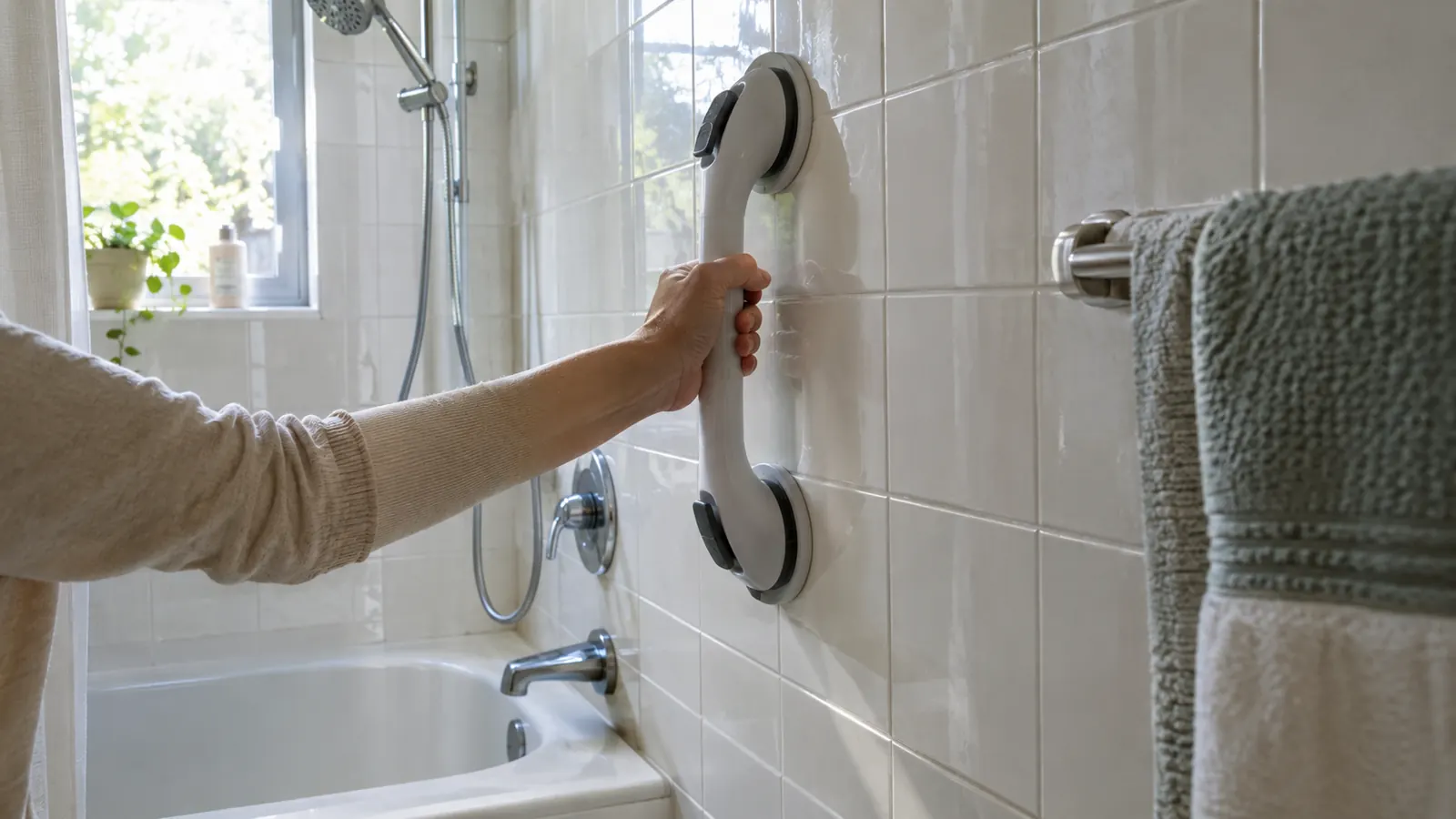
The question I get most often at the senior center, usually whispered over coffee, is the one I asked myself two winters ago: can I trust one of those suction grab bars, or do I need to drill into my tile? Here is the short answer I have landed on after a year of using both. A suction grab bar is a steadying rail. It is not a fall-catcher. I keep a pair of TAILI suction grab bars on the smooth tile of my upstairs tub for balance when I step in and out, and I re-check both discs before every single shower. That has been the right tool for me. But if what you are actually worried about is catching a fall, that is a screw-in bar's job, anchored into a stud, and no suction cup on earth can do it instead.
People do not love hearing that there are two different tools here, because it quietly means you might want both. My own bathroom is a working example. The half bath downstairs is dry, so it gets nothing at all. The upstairs tub-shower combo, the exact spot where I slipped getting out one icy morning, gets a screwed-in bar near the showerhead and my TAILI bars at the entry and along the back wall. The suction pair took about forty seconds to mount, left no holes, and moved twice when I changed my mind about placement. The screw-in bar took an hour, a stud finder, and a cordless drill, and it will leave two holes to patch whenever I finally get around to it. Both are earning their keep, and neither could do the other's job.
So when someone asks me which one they should buy, my honest answer is: it depends on what you need the bar to do on your worst day. If your worst day is a wobble on wet tile, a suction bar handles that beautifully. If your worst day is a fall, you need the bar screwed into a wall. The table below sums up how I see the trade-offs after living with both.
| TAILI Suction Bars | Screw-In Bars | |
|---|---|---|
| Installation | Press on, done in under a minute. No tools, no stud finder, no dust or mess. | Drill, anchors, screwdriver, and a stud finder to do it right. Budget a full afternoon the first time. |
| Surface compatibility | Smooth, non-porous tile, glass, or metal only. Textured and painted walls are out. | Any wall you can screw into, textured or not. |
| Strength | A balance assist. Holds steadying and a lean. Never full body weight, never a fall. | Anchored into a stud, it can take a full fall. This is the one that catches you. |
| Moving it | Peel it off and reposition in seconds. It even travels in a suitcase. | It lives where you mount it. Moving means patching holes. |
| Rental friendly | No holes, no deposit drama, no phone call to the landlord. | You either patch at move-out or leave holes behind. |
| Long term | Daily re-check becomes part of the routine, forever. | Set once and it is still holding in ten years. |
Where TAILI Wins
Start with installation, because that is where the suction bars win by a mile. My TAILI bars went up while I was still in my bathrobe. No drill, no anchors, no trip to the hardware store, no patching later. For anyone who lives alone, that matters more than it sounds, because you are not waiting for a nephew to visit with a drill or paying a handyman a call-out fee for a job that takes forty seconds. You press, you test, you shower. Done.
Then there is the freedom to change your mind, and I use that freedom more than I expected. My balance is not the same every week. After a bad night's sleep or a long day on my feet, I want a rail in a different spot. With the TAILI pair I moved one to the outside edge of the tub one morning and moved it back two weeks later, no tools, no spackle. I also tossed the two bars into a tote bag for a weekend at Kate's apartment, and her rental tile had them up and down in minutes without a single hole. That is the whole case for a suction bar in one sentence: it gives you a handhold exactly where you need it, for as long as you need it there.
One honest caveat before I move on. Suction bars are only as good as the daily relationship you have with them. If you cannot commit to the before-every-use check, or if you know your memory plays tricks on bad days, the suction pair is the wrong tool for you, no matter how smooth your tile is. That is not a small thing, and it is the first thing I tell anyone who asks.
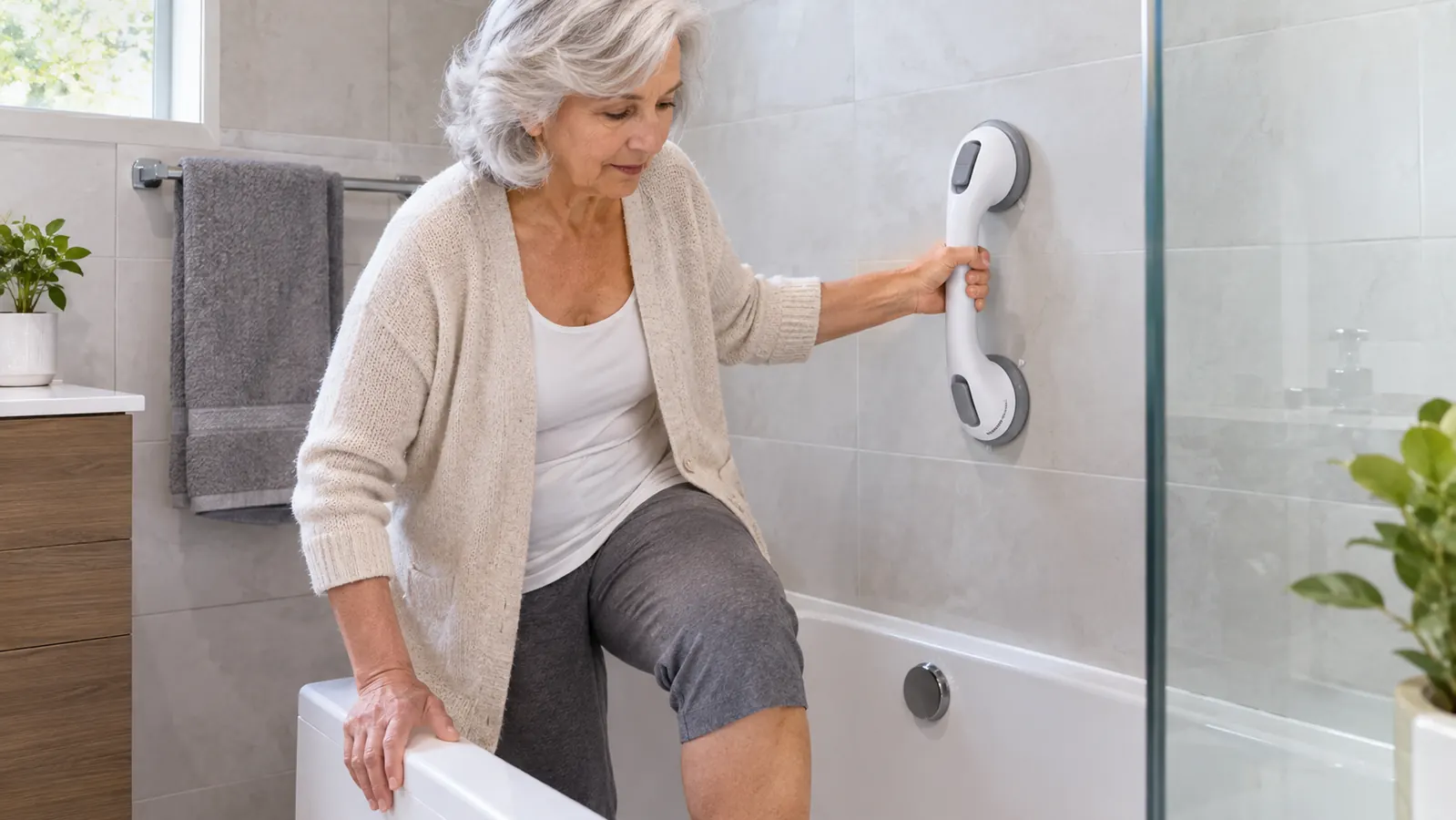
Where Screw-In Grab Bars Win
Now the part I will not soften, because it is the part that keeps people safe. If the job is catching a fall, the screw-in bar wins and it is not close. A bar anchored into a stud takes your full weight when your knees give out at the worst possible moment. A suction bar is not built for that. The instructions that come with the TAILI bars say it plainly: re-check before every use, smooth non-porous tile only, never hang your full body weight. I follow that rule to the letter, and the reason is simple. I want the suction bar for steadying, and I want a real fall-catcher doing the catching.
Screw-in bars also win on walls that suction simply cannot touch. Textured tile, painted drywall, stone, paneling, all of it. A suction disc needs smooth, non-porous tile, and no amount of pressing and twisting changes that. Set-and-forget is the other quiet advantage. With my screwed-in bar by the showerhead I still give it an honest tug before I step in, but I do not re-check it every day the way I do the suction pair. For someone with arthritis or memory trouble, that daily re-check can be the difference between a habit that happens and one that gets skipped. My mother, who used a walker in her last years, would have been better served by screw-in bars in every room, and I will say that plainly.
For the 99 days out of 100 that are about steadying, not falling
Those are the days a TAILI suction bar earns its spot. A firm, easy-to-grip rail exactly where you need it, no drill, no holes, and it moves when your needs do. The 2-pack of 16.8-inch bars mounts on smooth tile in under a minute and comes down just as easily. Just remember the rule: it is a steadying rail, never hang your full weight, and re-check the suction before every use.
Amazon Check Today's Price on Amazon →Who Should Buy Which
If you rent, or if your bathroom is smooth tile, or if you simply like the idea of moving a rail to whichever wall needs it this season, the TAILI suction pair is the sensible buy. It made a real difference to how steady I feel stepping into the tub, and it did not ask my landlord for permission. It is also the right answer when you are not ready to commit holes to a house you might not grow old in, which is a more common feeling than people admit.
But if the reason you are reading this is that you or someone you love has had a fall, or deals with vertigo, or is recovering from surgery, then start with a screw-in bar. Anchor it to a stud, hire a handyman if you have to, and treat that as your safety net. Use the suction bars for ordinary steadying on top of it. And if there is any question about balance or recovery, run the whole plan past your doctor or a physical or occupational therapist before you buy anything. That is not a disclaimer. It is the smart way to spend money on your own safety, and I wish someone had said it to me before my fall.
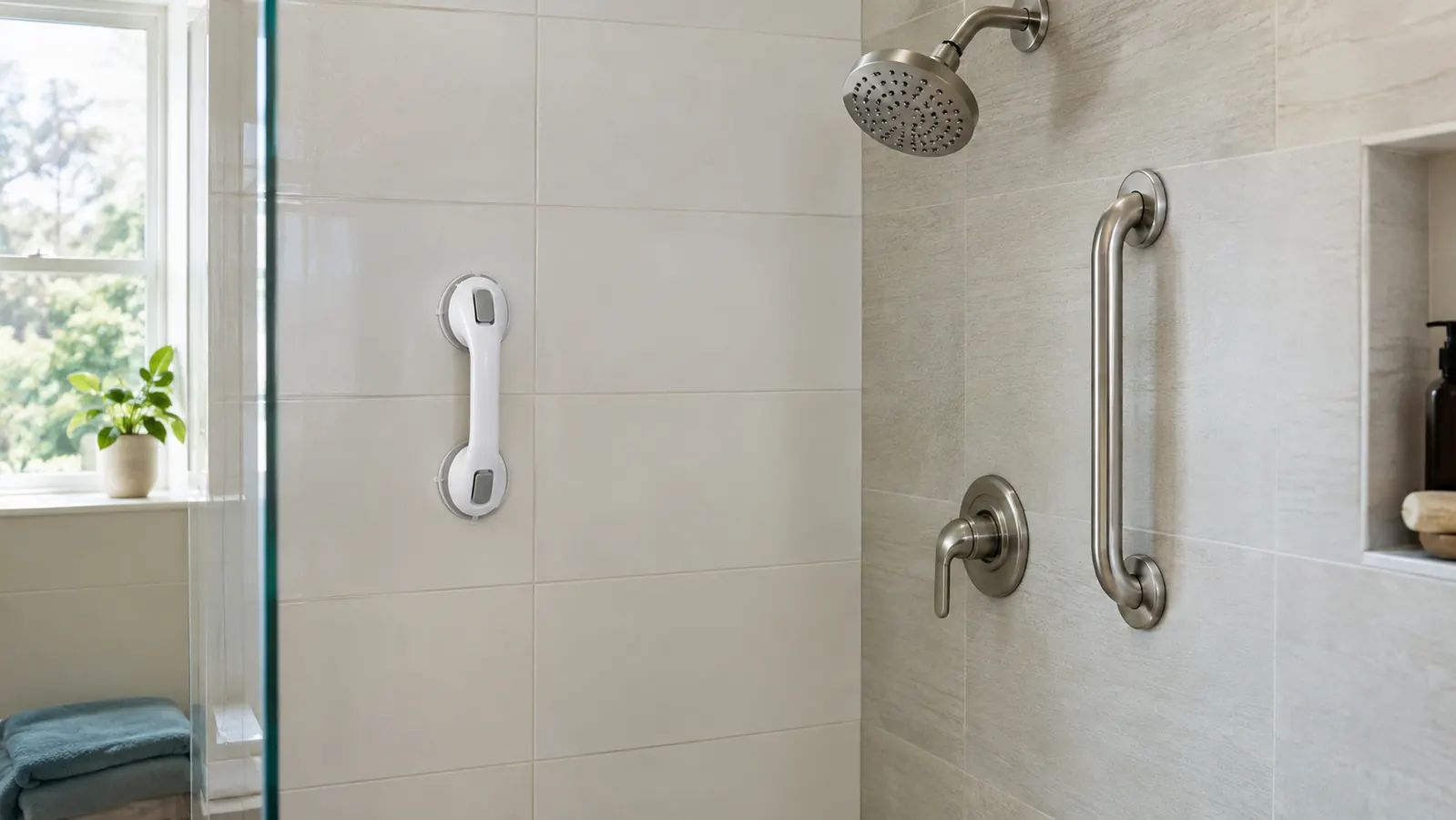
How I Tested Them Side by Side
A year ago I did something slightly unscientific but very practical: I ran both kinds of bars in the same bathroom for six months to see which I reached for. Every morning I gave the TAILI pair a firm push before my shower, the way the instructions say, and once a week I took one off, rinsed the disc, dried the tile, and pressed it back on. That rinse-and-repress takes about two minutes and it is the single best thing you can do to keep a suction bar honest. Bathroom grime is what makes discs slip, not age.
The screw-in bar got no such ritualized treatment, which is exactly the point. After installation it just sat there, month after month, and every time I grabbed it, it did not move a millimeter. I have never once wondered whether it was going to hold. I cannot say that about the suction bars, and I do not think anyone should. That is not a knock on them. It is the difference between a tool you trust with your life and a tool you trust with your balance, and it is worth knowing which is which before you are standing on wet tile.
The other test was practical in a different way. My daughter Kate came to visit with questions of her own, because her rental apartment has a shower I had not seen, and she wanted to know whether the bars would work there. We tried one on the smooth tile, it held a firm tug, and I told her to re-check it daily and to ask her landlord before trusting it long term. That is the honest boundary of a suction bar, and it is better to know it before you buy than after.
The Daily Re-Check, and Why It Matters
Here is the habit that makes suction bars work, and I mean the word habit. Before every shower I push firmly on both TAILI bars with my palm. If either shifts even slightly, I step out, rinse the disc, dry the tile with a hand towel, and press it back on. That test takes five seconds. Skipping it takes one bad morning to regret. The bars have never failed me during a shower, and I credit that daily check far more than the bars themselves.
I also want to be straight about what I have seen go wrong, because the reviews are full of it. The failures I read about are almost always people using a suction bar on a wall it does not belong on, or skipping the re-check, or leaning their full weight on it like it is a staircase rail. None of those are the product's fault. It is a steadying rail for smooth tile, full stop. Stay inside that job description and it stays honest. Step outside it and you are the problem, not the bar.
One more thing, and then I will get out of your way. When you first put a suction bar up, give the tile a real cleaning. A bar pressed onto tile that still has invisible soap scum has nothing to grip. Press it on, give it one strong push to seat the disc, and then wait a minute before you lean on it. That sixty-second pause is cheap insurance, and it is the difference between a bar that moves when you want it and one that moves when you do not.
A steadier grip exactly where you need it, with zero holes to explain
The TAILI 2-pack gives you a firm handhold on smooth tile in under a minute, and it comes down as easily as it goes up. Use it as a steadying rail, pair it with a stud-anchored bar where a fall is a real risk, and re-check the suction before every use. See the current listing, ratings, and owner reviews on Amazon before you decide.
Amazon Check Today's Price on Amazon →