
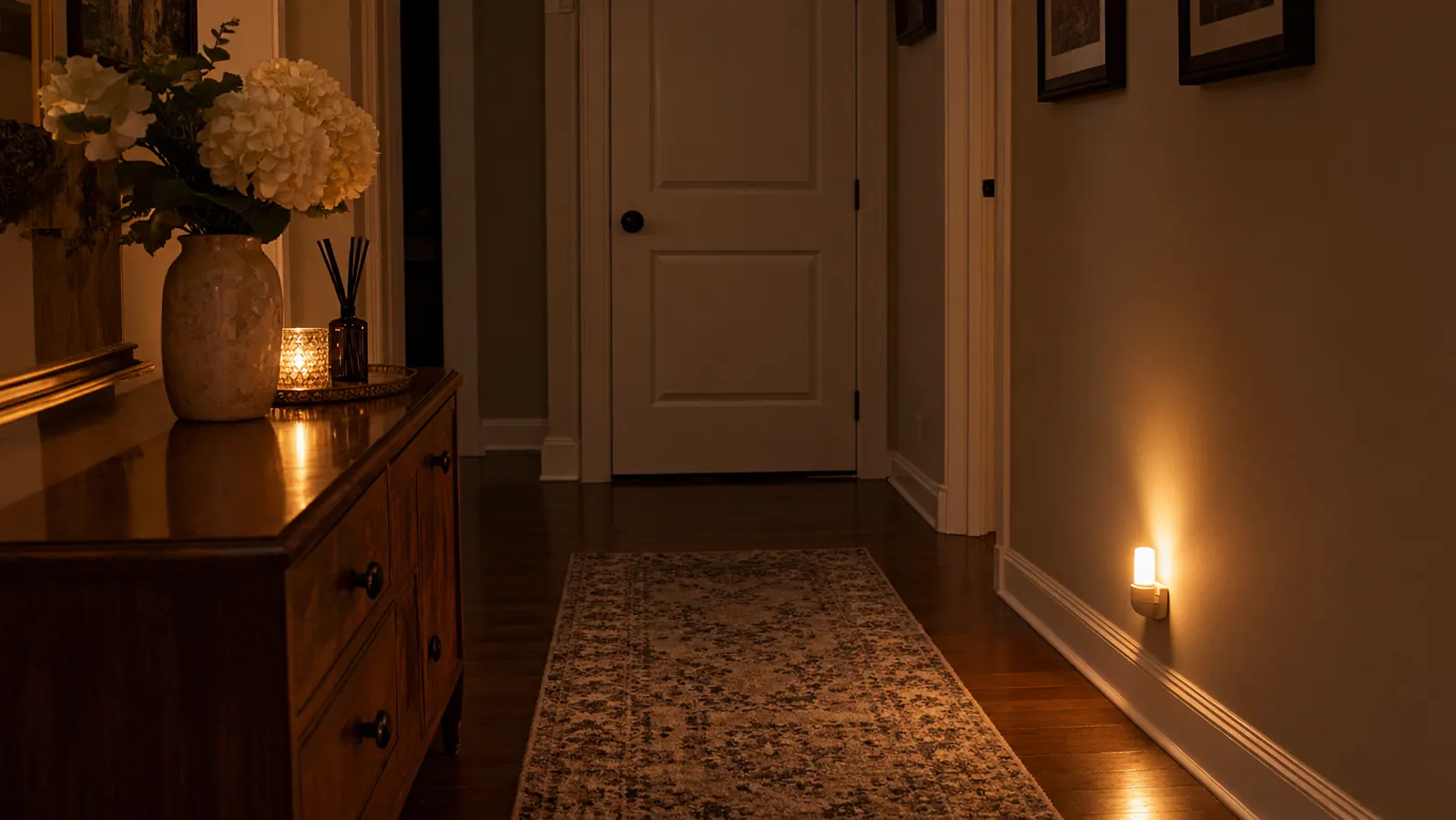
It happens almost every night. You wake up at 2 a.m., you need the bathroom, and the house is pitch black. You know the route by heart, so you shuffle along with one hand on the wall, trying not to stub a toe or bump the doorframe. Then you stand in the dark and wonder whether the light switch is where you remember it.
I am Marjorie, and I have been thinking about this a lot since I took a bad slip getting out of the tub a couple of winters ago. I was fine, mostly a bruised hip and a good scare, but it made me look at my house differently. The path from my bed to the bathroom is short. It is also completely dark at 3 a.m. So I set out to fix that, and the AUVON plug-in night lights are the tool that made it easy.
The 4-pack that covers the whole route, bed to bathroom
AUVON plug-in night lights with motion and dusk-to-dawn sensors. Plug one in near the bed, one in the hall, one in the bathroom. The path stays dark until you need it, then lights up on its own.
Amazon Check Today's Price on Amazon →Step 1: Walk the route in the dark first
Before you buy anything, do what I did. One night, when the house was fully dark, I walked from my bed to the bathroom without turning on a single light. I went slowly, the way you do at 2 a.m., and I noticed every place where I hesitated. The corner of the dresser. The doorframe. The step down into the hall. The spot where the bathroom door swings open.
That walk told me exactly where I needed light. I needed to see the path from the bed to the door, the floor in the hallway, and the area right around the toilet. I did not need a floodlight. I needed small, low lights that would let my eyes adjust and point me in the right direction without waking me up fully.
Write down what you find. You will be surprised how many little decision points there are between your pillow and the bathroom. Each one is a place where a fall could start. In my house, the route from the foot of the bed to the bathroom door is about fifteen feet with a turn at the hallway, and I counted six places where I hesitated, even slightly. Six spots in fifteen feet. I timed the walk once out of curiosity. It takes about eight seconds with the lights on and feels like a full minute in the dark.
Step 2: Choose lights that turn on by themselves
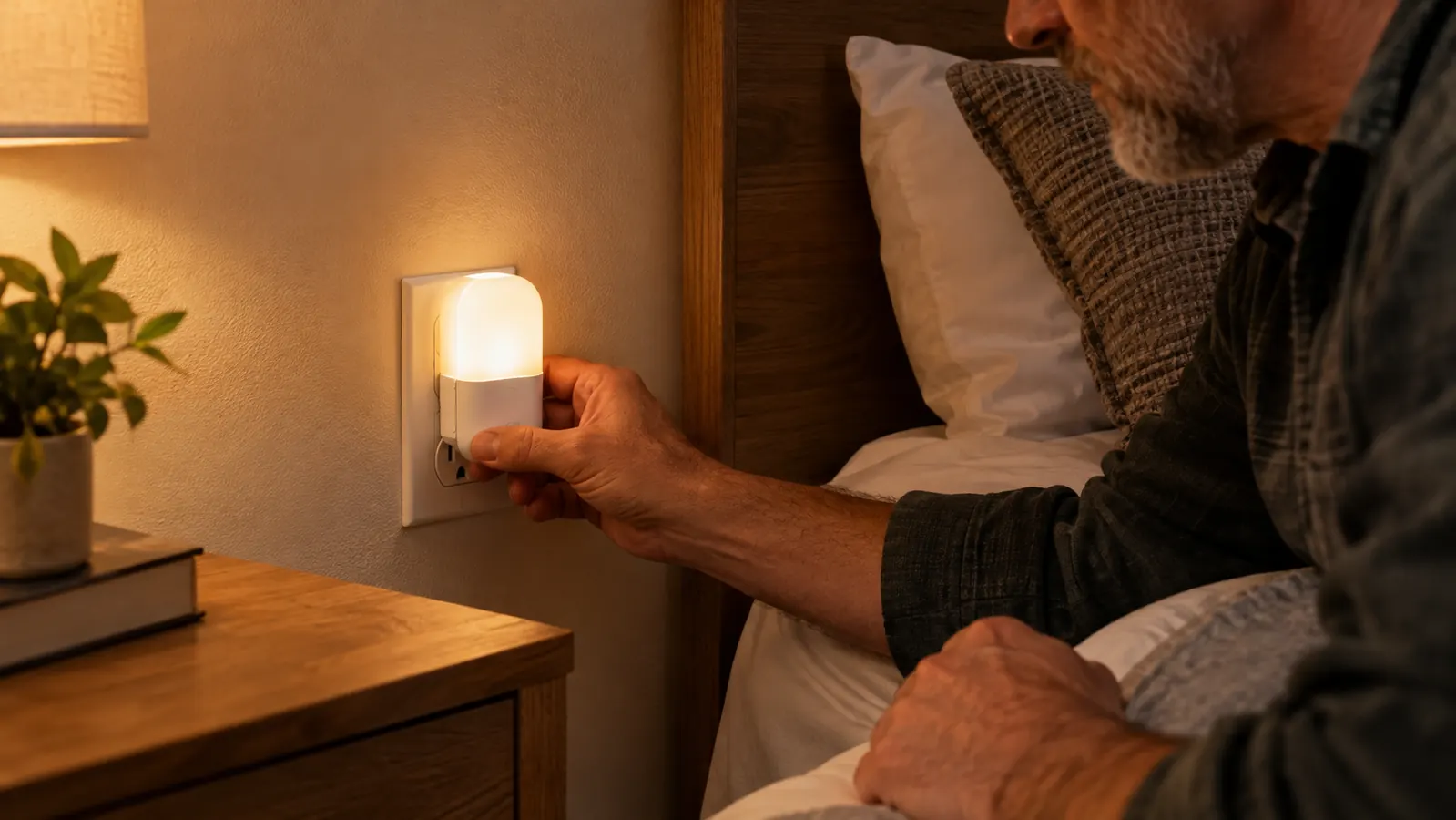
The whole point of a night light is that you do not have to think about it. A switch you have to find in the dark is not a solution, it is the same problem with extra steps. That is why I chose the AUVON plug-in night lights. They have two sensors built in. The dusk-to-dawn sensor turns them on when the room gets dark and off when it gets light, and the motion sensor brightens them when you walk past. Before this set, I tried a plug-in light that stayed on all night, and it was too bright. I kept waking up thinking it was morning.
Then I tried a battery-powered light that died at the worst possible moment, which I only discovered when I reached for it at 2 a.m. and found nothing. That is when I started looking for something with a motion sensor and a dusk-to-dawn sensor, and the AUVON four-pack was the first one that did both without fuss. In practice, the two sensors mean the hallway stays dark while I am asleep. The light is not shining in my eyes or keeping me awake. When I get up and my feet hit the floor, the light near the bed comes on, and by the time I reach the hallway, the next one is already glowing. It feels a little like the house is helping me, which is exactly what I wanted.
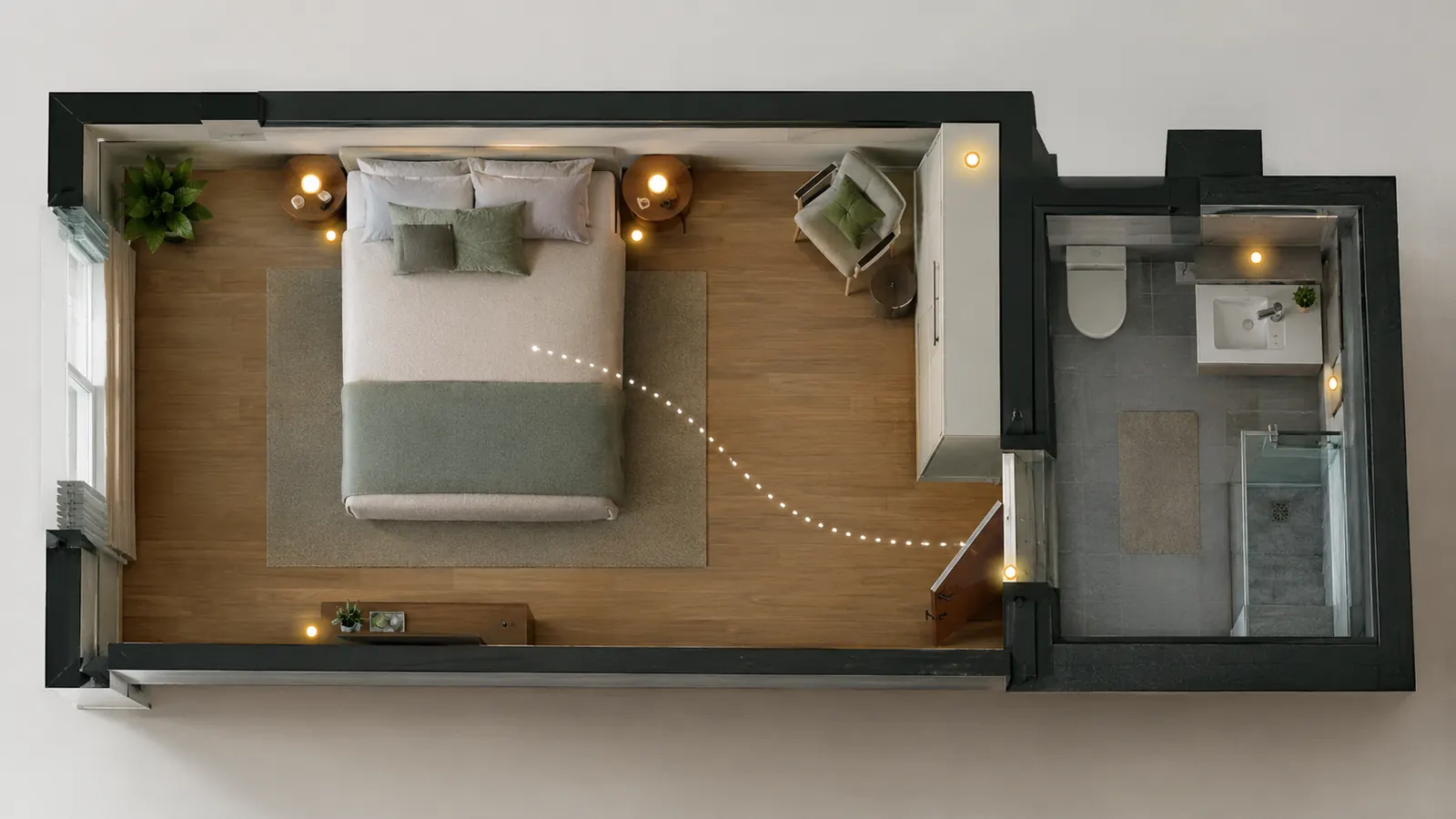
AUVON makes these in a four-pack, which turned out to be the right number for my house. One went next to my bed, one went in the hallway, one went in the bathroom, and I kept the fourth for the kitchen outlet near the back door. It has come in handy more than once when I got up for water. If you have a larger house or a longer route, you can add more. The lights are small and unobtrusive, and they plug straight into a standard outlet.
Step 3: Place them low, near the floor
Here is the thing I learned from my own trial and error. A night light at eye level is a glare machine. It lights up the whole room and destroys your night vision. A night light near the floor does something different. It outlines the path, shows you where the furniture is, and leaves the rest of the room dark. Your eyes stay adjusted, and you stay sleepy.
I put the AUVON light in the bedroom in the outlet closest to the floor, near the foot of the bed. That outlet is about a foot off the floor, which turned out to be ideal. In the hallway, I used the outlet at the end of the hall, so the light shines along the floor toward the bathroom, and I can see its glow from my pillow. In the bathroom itself, I placed it near the toilet, not near the mirror. The mirror light would have been too bright and too disorienting at night.
The motion sensor on the AUVON lights has a good range, so I did not have to be precise about placement. As long as the light is between me and where I am going, it does its job. If you are not sure where to start, put one light in each room along the route and adjust from there. I moved the hallway light exactly once, and that was the whole adjustment.
Step 4: Test the route for a few nights
Once the lights were in place, I tested them the way I would test anything else in my house. I got up at night, on purpose, and walked the route. I wanted to see whether the motion sensor picked me up in time, whether the light was bright enough to see the floor but not so bright that it woke me up, and whether I still had to hesitate anywhere.
The first night, I learned that the light in the hallway needed to be closer to the bedroom door. The sensor picked me up a beat later than I wanted. I moved it one outlet over, and that fixed it. The second night, I realized the bathroom light was casting a shadow on the toilet. I angled it differently, and that fixed it too.
Give yourself a few nights to get this right. Everyone's house is different, and the goal is not perfection. The goal is a route you can walk safely at 2 a.m. without turning on a bright overhead light and without feeling your way along the wall. By the third night, I stopped thinking about the lights altogether, which is the real test. I got up, walked the route, and walked back without ever fumbling for a switch. The whole trip takes less than two minutes, and not once did I have to reach for the wall.
Step 5: Make the bathroom itself safer
Lighting the path is only half the job. The bathroom is where most of my own worry lives, and it deserves its own once-over. I keep a night light in there, as I said, but I also cleared the floor between the door and the toilet. No bath mat with curled edges, no laundry basket in the path, nothing that could trip me when I am half asleep. The step out of the tub is about nine inches. That does not sound like much until you are doing it half awake on wet tile. I keep a bath mat with a rubber backing just outside the tub, and I make sure it is flat before I get in.
If you have a tub-shower combo like mine, think about the step out of the tub. That is where I slipped two winters ago. I use a suction grab bar to steady myself when I get in and out, but I want to be very plain about this: a suction bar is a balance assist, not a load-bearing grab bar. I never hang my full weight on it. I re-check the suction before every use, and I only use it on smooth, non-porous tile. If you need something to catch a fall, a screwed-in grab bar anchored to the studs is the right choice. And if you have had a recent fall or you are recovering from surgery, please talk to your doctor or a physical therapist before you change anything.
The AUVON light in the bathroom stays on all night in its low setting, which is enough to see the toilet and the sink without being bright enough to bother me. In the morning, the dusk-to-dawn sensor turns it off on its own. I never touch it.
What Else Helps
The night lights do the main job, but a few small things made the route even easier. I moved the phone charger to the nightstand on the same side as the bathroom, so I do not have to reach across the bed. I put a small flashlight on the nightstand as a backup, in case the power goes out. And I made sure the path from the bed to the door is completely clear, which meant moving a chair that I liked but that did not need to be there.
I also want to say something about the stairs in my house. I live in a split-level, so there are short stair runs between the levels, and the half bath is downstairs. I keep an AUVON light at the top of the stairs and one at the bottom, so the steps are visible from both directions. If you have stairs anywhere on your route, that is the first place I would put a light. My daughter Kate noticed the difference the first time she stayed over. She said the house felt easier to move through at night, which is exactly the point.
The hallway stays dark while I sleep. When my feet hit the floor, the light near the bed comes on, and by the time I reach the hallway, the next one is already glowing.
Why I Chose AUVON Over the Alternatives
I looked at a lot of night lights before I settled on the AUVON set. Some were too bright, some were too dim, and some had sensors that seemed to fire at random. One set I tried had a light sensor so sensitive that it came on during a cloudy afternoon. Another made a faint hum that I only noticed once the house was quiet, and once I noticed it, I could not unhear it. What I liked about the AUVON lights is that they are simple. They plug in, they turn on when it gets dark, they brighten when I walk by, and they turn off in the morning. There is no app, no pairing, no learning curve.
The four-pack also happened to be the right size for my house, which meant I did not have to buy two different sets and hope they matched. And because they are small and low, I barely notice them during the day. They are one of those rare pieces of home-safety gear that you install and then forget about, in the best way.
Light the whole route tonight
Four AUVON plug-in night lights cover the bedroom, the hall, the bathroom, and one spare. Plug them in low, test the route for a few nights, and you are done.
Amazon Check Today's Price on Amazon →