
I almost didn't buy these. Let me set the scene first. Two winters ago I got out of the tub too fast, my foot slipped on the tile, and I went down hard on my hip. No broken bones, thank goodness, but I spent a month moving carefully and the next several months thinking about every place in my house where a fall could happen. I am 67, I live alone in a split-level house outside Hartford, and I have a rule now: if I can make a surface steadier in an afternoon of work, I do it.
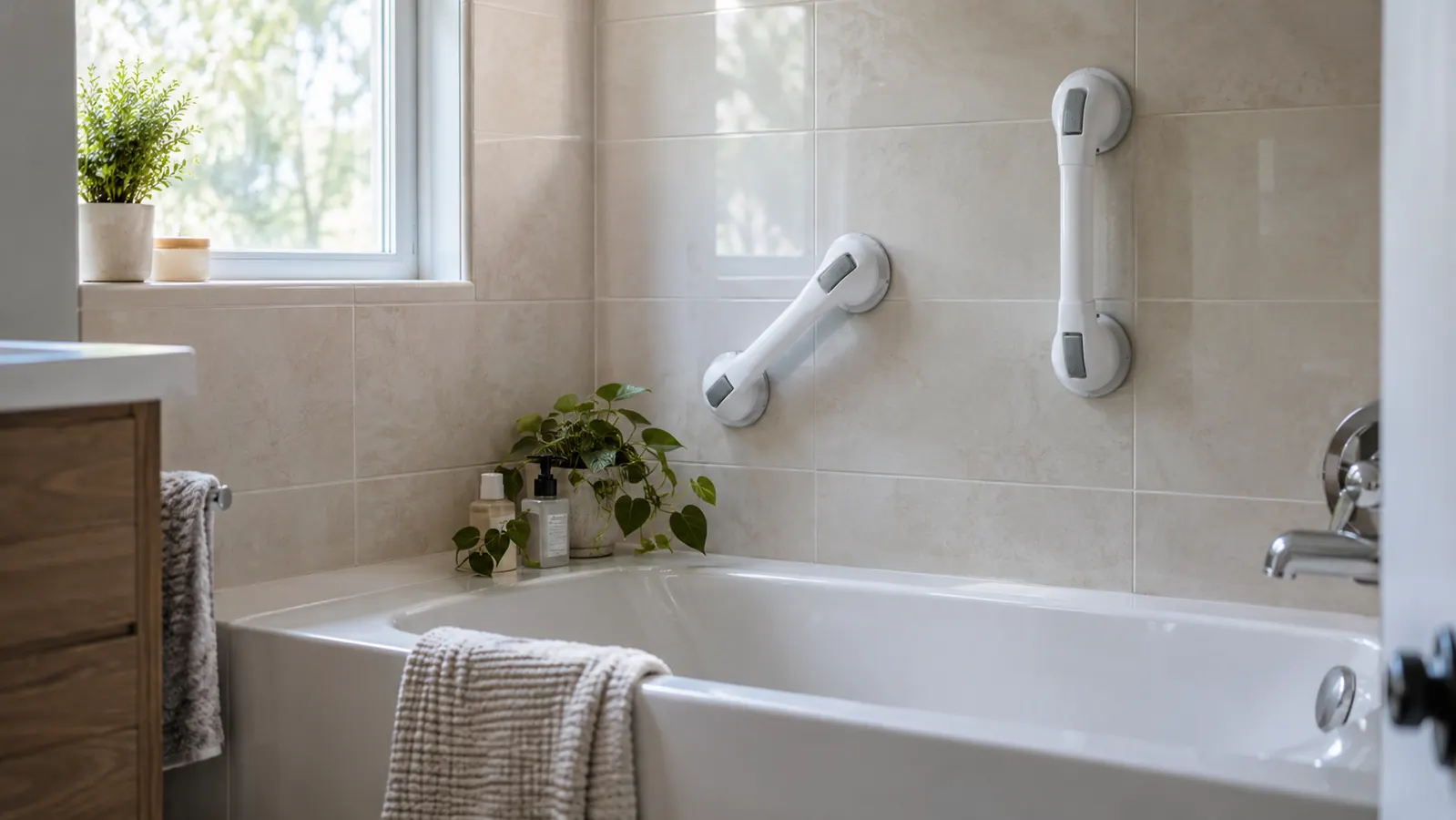
So I started researching grab bars. This is where TAILI kept showing up: a two-pack of 16.8-inch suction bars with thousands of reviews and a rating I remember as solid, not spectacular. And I kept scrolling past them. I had it in my head that a suction bar was a gimmick, a cheap answer to a real safety problem. The internet only made it worse. Every thread had somebody swearing the suction kind popped off in the night, and somebody else swearing theirs had held for years.
I leaned toward the screwed-in kind. That's what got recommended when my mother was still with us and needed more support around her house, and my mother used a walker at the end, so I figured that advice applied to me too. Except it didn't, not entirely. My mother's house had studs where you wanted them. My house is from 1962, which means the walls have opinions. And the spot where I actually needed help, right beside the tub where I slipped, the backing behind that tile is anybody's guess. A screwed-in bar is only as good as what's behind the wall, and I wasn't about to find out the hard way.
Then a friend from my strength class, a woman who had a hip replaced a couple of years back, said something that rearranged the whole question. She said: decide what the bar is for. If it's for catching you when you fall, it needs to be screwed into a stud. If it's for giving you a steadying hand while you step out of the tub, a suction bar is fine, as long as you treat it like the helper it is and never like a rescue rope. I needed the second thing. I needed a hand to hold, not a rope to save me.
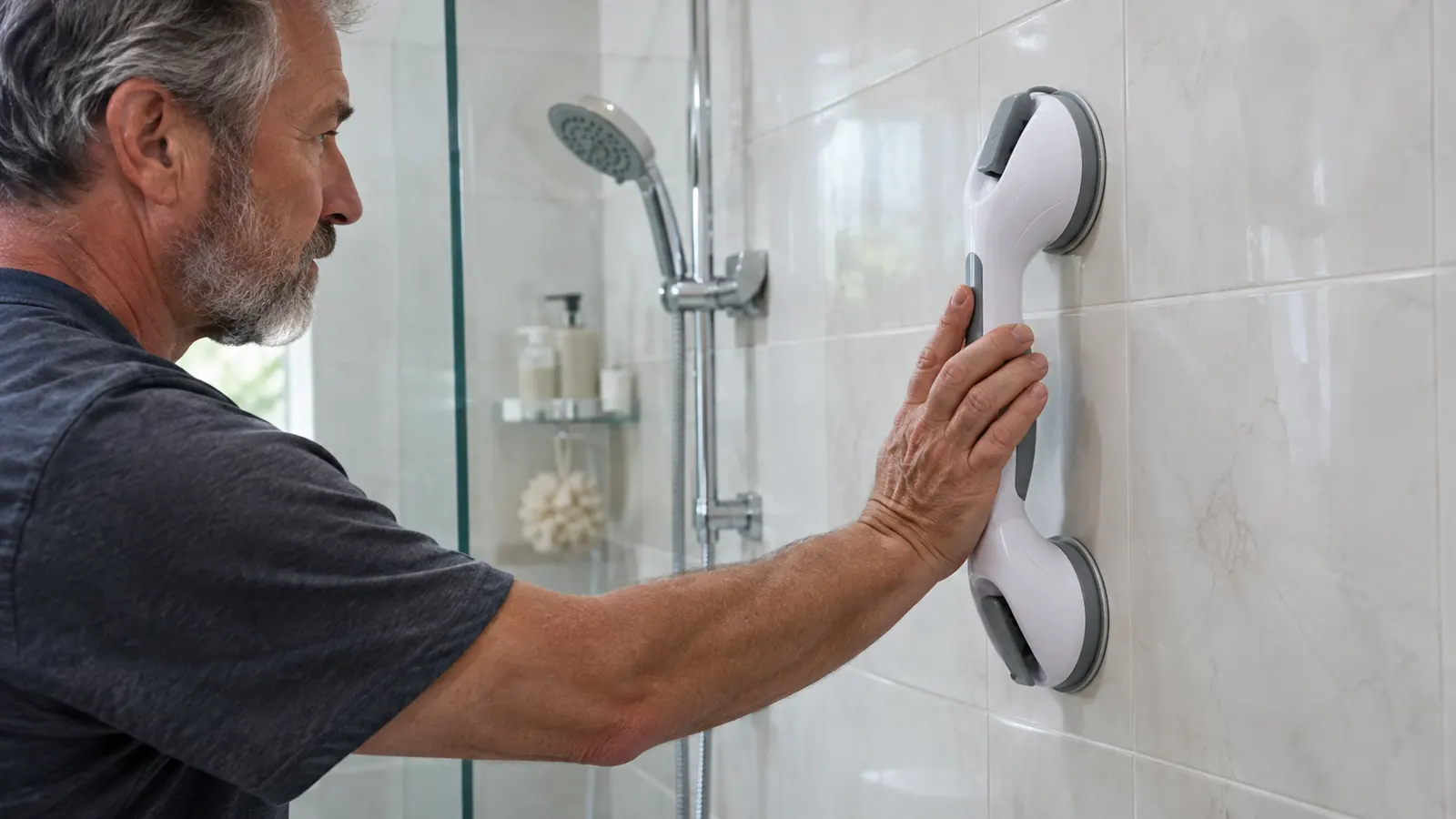
So I ordered the TAILI two-pack and installed one bar beside the tub with about as much ceremony as hanging a towel rack. Clean the tile, dry it, press the bar flat, lock the suction lever. That was it. I gave it a good tug and it did not move. I tugged harder, the way I would if I were off balance, and it still held. Then I did the thing I told myself I wouldn't do: I leaned on it with real weight, just once, to see what would happen. It held, because I had pushed it against a perfectly smooth, flat tile wall. And that is the sentence I want you to remember: it held because of the surface, not because of magic.
I decided before I installed the first bar that I would never hang my full weight on it, and ten months later I still haven't. That decision is what makes these safe.
Two 16.8-inch bars, ten minutes, and a two-second check before every use
If smooth tile and a steadying-hand problem sound familiar, the TAILI two-pack is a low-friction place to start. See today's price and current owner reviews on Amazon.
Amazon Check Today's Price on Amazon →Now, the things you should know before you order your own. The TAILI bars are a balance assist, not a load-bearing grab bar, and I am going to say that in plain words because the product pages do not always say it that way. Never hang your full body weight on a suction bar. Re-check the suction before every single use. Only mount them on smooth, non-porous tile; textured tile, grout lines, and painted surfaces will not hold the same way. And if you have had a fall, if you are worried you might fall, or if you are recovering from surgery, talk to your doctor or a physical therapist about what you actually need before you buy anything. I decided at the start that I would never hang my whole weight on these bars, and I never have.
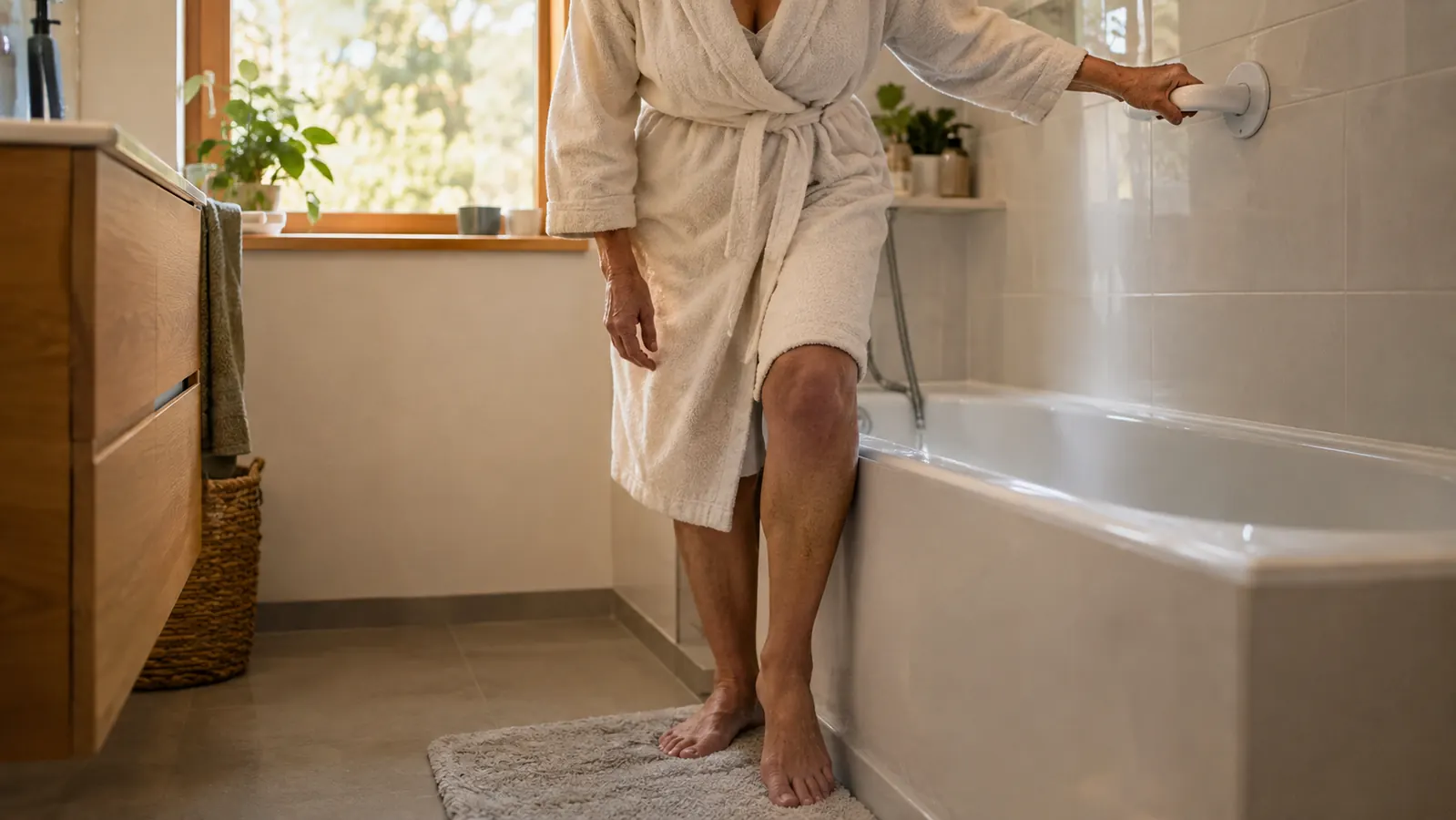
For me, the routine is simple. Before I step into the tub I press the bar once, top and bottom, and listen for the little click that says the suction is holding. It takes two seconds. My daughter Kate laughs at me for it, and then Kate calls to check that I've done it, so I think she gets it. The second bar went in the half bath near the back door, where I land with muddy shoes on a floor that can be slick. Same routine: wipe, press, lock, check.
Ten months in, both bars are still on the wall. Neither has ever popped off. But I check them anyway, every time, because the check is what makes them safe, not the suction. Between the two of them I have not grabbed for the shower rod once, and I've stopped bracing myself against the vanity when I stand up from the toilet. That is the quiet part of aging in place: it's not dramatic, it's just steadier.
What I'd Tell You If We Were Sitting at My Kitchen Table
Here's what I'd say if you were here with coffee in hand, asking whether these are worth it. Decide what the bar is for before you decide which bar to buy. If you need a hand to steady yourself while you step over the tub edge, or while you stand from the toilet, or while you wipe your feet at the back door, a suction bar can do that job well, provided your tile is smooth and you check it every time. If you need something that can catch you mid-fall, you need a bar screwed into a stud, full stop. That is not a compromise, it's just matching the tool to the job.
And one more thing: buying these does not make you old. Staying in the house you love makes you sensible. I put my bars up the same week I signed up for a new session of my strength class, and I think of them as the same kind of decision. Both of them are me deciding to keep living my life, just with better support.
The easiest safety upgrade I've made to this house
If you've got smooth tile and a steadying-hand problem, this is a good place to start. The two-pack has been up for ten months here and never let go. Check today's price and current reviews on Amazon.
Amazon Check Today's Price on Amazon →