
Two winters ago I slipped getting out of the bathtub. Nothing broke, thank goodness, but I spent a week moving like a woman who had been told not to. The bruise faded. The caution did not. That is what finally pushed me to look at my bathrooms the way I wish I had helped my late mother look at hers: as rooms I could make work for me, instead of rooms I had to brace myself in. I am sixty-seven, I live alone in a 1962 split-level outside Hartford, and I have no interest in leaving this house until I choose to.
So this spring I did what I always do when a product matters: I tested it like I used to test dental supply catalogs. I put two of the most popular toilet safety frames through a full month of daily use in my own house. The Vive Toilet Safety Rail went in first. Then I swapped in the Carex Toilet Safety Frame for a week. Then I swapped back. The short answer is that I kept the Vive in my upstairs bathroom, and I would still tell a close friend to buy the Carex if she needs to put serious weight on the arms. They look similar in product photos. They feel different in real life, and the difference comes down to your bathroom, your body, and how much support you actually need.
| Vive Toilet Safety Rail | Carex Safety Frame | |
|---|---|---|
| Footprint | Compact frame that hugs the bowl with no legs on the floor | Full frame with four legs that reach the floor and need clearance |
| Support style | Rails mounted around the bowl; you push off the arms | Floor-supported legs carry your weight straight down |
| Weight capacity | Published rating of 300 lb | Published rating of 300 lb |
| Cleaning around the toilet | Open floor around the bowl; mop without dodging legs | Four legs collect dust and make the base harder to reach |
| Small bathroom fit | Works in a tight half bath; I used it in mine | Feels crowded in a small space |
| Value | More features for a moderate cost | Usually the more budget-friendly pick |
| Warranty | 3-year warranty from Vive | Standard limited warranty |
| Best for | Compact bathrooms and keeping the floor clear | Larger bathrooms and full-weight support |
How I Tested Both in My Own Bathroom
My house is a 1962 split-level, which means two bathrooms and neither one is generous. Upstairs is a full bath with a tub-shower combo, and that is where I do my daily business. Downstairs is a half bath so narrow that I have to turn sideways to close the door. I installed the Vive first and used it for two weeks. Then I moved it to the downstairs bath and put the Carex upstairs for a week. Then I swapped them back. I wanted to judge both frames on the same toilet, the same floor, and the same tired legs at the end of a long day.
I also roped my daughter Kate into the project when she came to visit. She lives about an hour away and comes most weekends, and she has never once hesitated to tell me when I have bought something silly. She noticed things I missed, like how the Vive's arms sit closer to the bowl and how the Carex's legs change the way you step up to the toilet. I kept a notebook by the bathroom door and wrote down anything that annoyed me or impressed me. That notebook, plus Kate's blunt observations, is what this comparison is built on.
One thing I want to be clear about: I am not a physical therapist and I am not going to pretend to be one. What I am is a sixty-seven-year-old woman who has spent a month using both of these frames every single day, and who has a healthy respect for what can go wrong in a bathroom. If you have had a recent fall, or you are recovering from surgery, or your balance has been giving you trouble, talk to your doctor or a physical therapist before you buy anything. They can tell you which support style is right for your body, and that is worth more than any article, including this one.
The Vive is the frame I kept. The Carex is the one I would hand to a friend who needs to lean hard.
Where Vive Wins
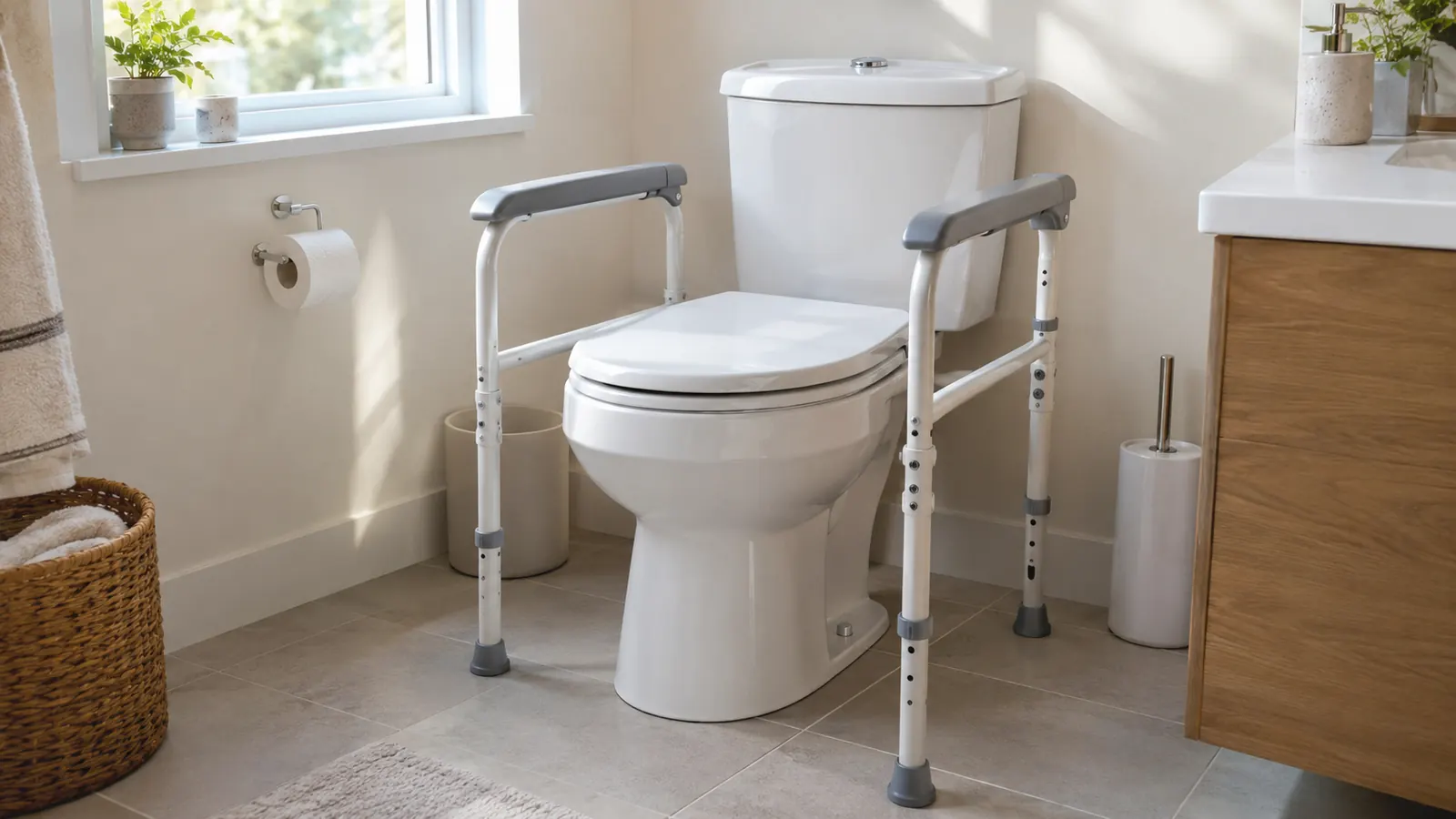
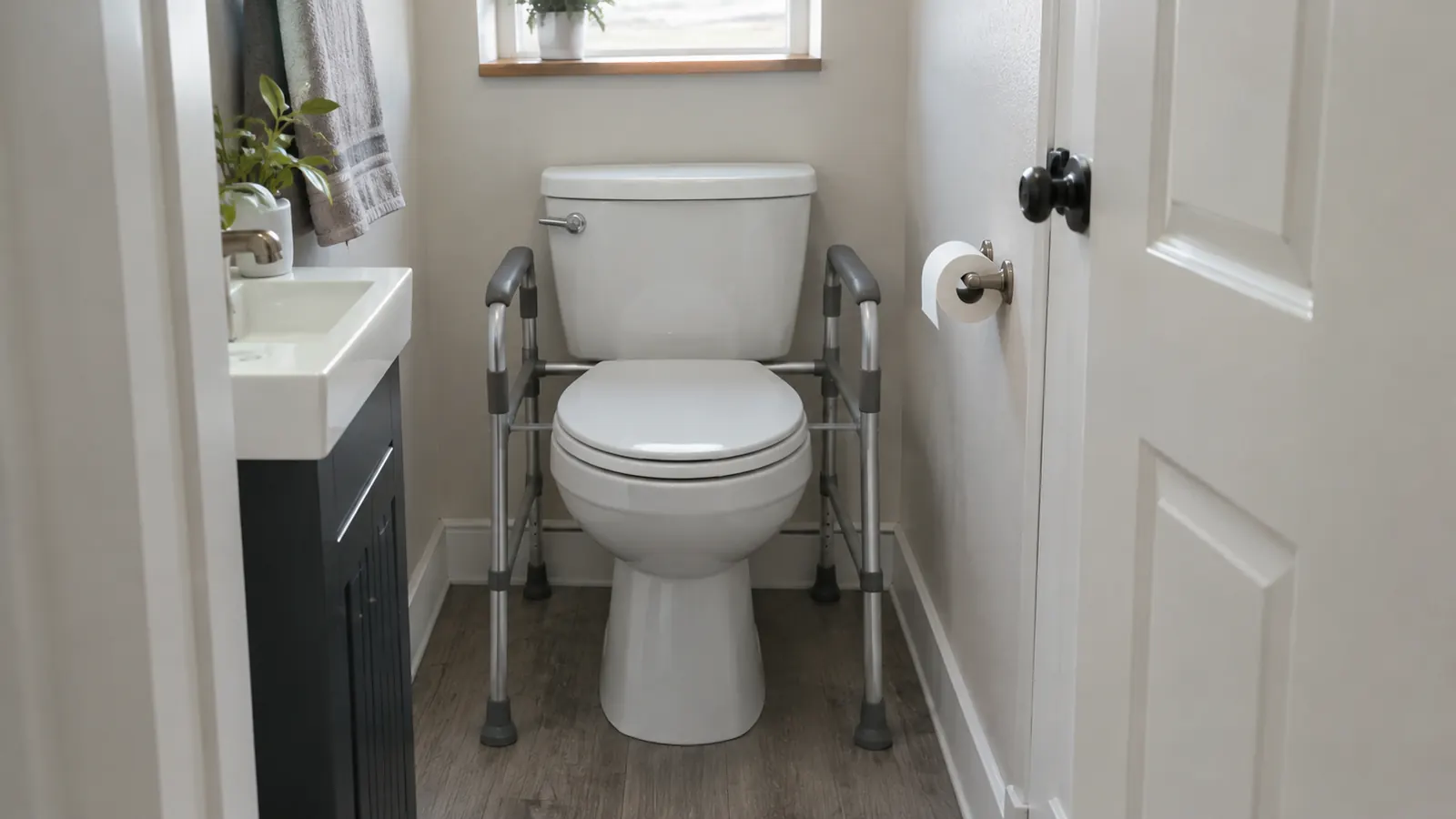
Start with the footprint, because that is the first thing you feel in a small bathroom. The Vive's frame wraps around the bowl with the arms sitting close, so there are no legs stretched across the floor. In my downstairs half bath, that is the difference between a room that works and a room where you play a quiet game of hopscotch every time you need the sink. I could still reach the toilet paper holder, open the door all the way, and stand at the mirror without backing into a metal leg. If your bathroom is tight, this is the design that disappears into the room.
Cleaning sold me just as hard. With the Vive, the floor around the toilet is wide open. I can mop under and behind the bowl without threading the mop between four legs, and the frame is light enough to lift aside when I want to do a real deep clean. That matters more than you might think. A frame with legs on the floor collects dust, catches the vacuum, and generally makes the bathroom feel like a storage closet for medical equipment. The Vive does not do that. It sits quietly around the toilet and lets the room stay a room.
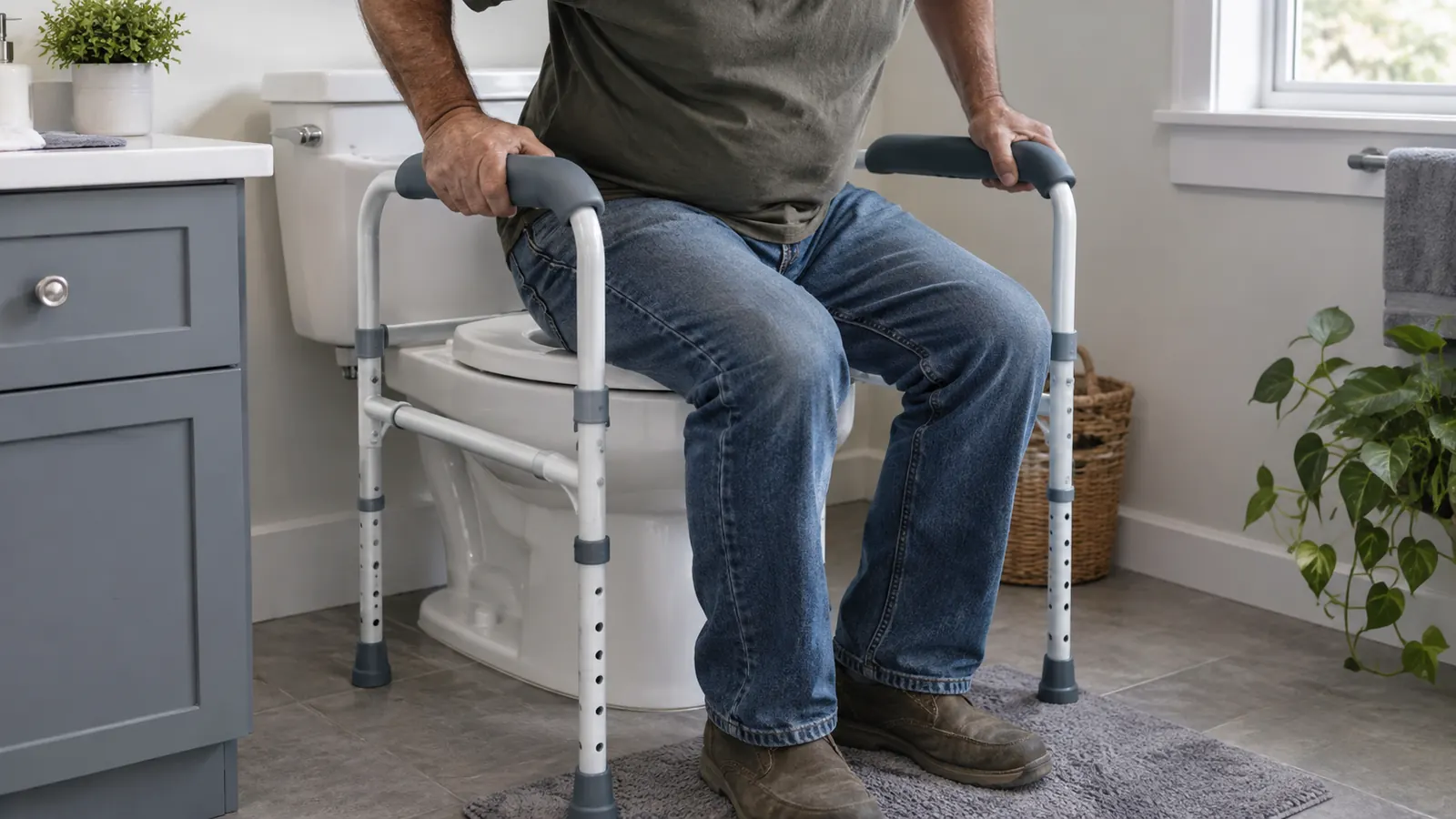
The height adjustment is tool-free, which matters when your hands are not what they used to be. I set mine once and it has not moved in a month of daily use. The arms have a comfortable grip, and the frame feels sturdy when I push off it to stand. I am not exactly a featherweight, and I never once felt like the Vive was going to shift under me. That confidence is the whole point of buying one of these things in the first place.
Where Carex Wins
Now the honest part, because a comparison that gives one product every round is not a comparison, it is an advertisement. The Carex's legs go all the way to the floor, and that changes how it feels when you push down hard. With the Vive, your weight goes through the frame and into the toilet bowl. With the Carex, it goes straight into the floor. If you are recovering from surgery, if you are heavier, or if you simply want the most grounded thing you can lean on, that floor connection is the design I would choose. It is also the difference worth raising with your doctor or a physical therapist if you are not sure which support style is safer for your situation.
The Carex is also, in most cases, the more budget-friendly option, and there is nothing wrong with that. It is a straightforward, no-frills design from a company that has been making this kind of equipment for a long time. If you are outfitting a second bathroom, or you are buying for a parent and money is tight, the Carex is the practical pick. I would not call it flimsy. I would call it honest, and honest is a compliment.
There is one more thing the Carex does that surprised me. Because its legs reach the floor, the frame stands on its own before you ever sit down. The Vive needs the toilet bowl to hold it in place, which is fine once it is installed, but the Carex feels like a piece of furniture that happens to live in the bathroom. For someone who likes the idea of a frame that could be moved to a different bathroom without much thought, that independence has real appeal.
The Vive is the frame I kept in my own bathroom
It fits the tight spaces, keeps the floor clear, and the tool-free height adjustment took me under a minute. If that sounds like your bathroom, this is the one to look at.
Amazon Check Today's Price on Amazon →What Nine Thousand Owners Say
I am not the only one with opinions about this. The Vive Toilet Safety Rail has more than nine thousand ratings on Amazon and holds a 4.4-star average, which is respectable for any mobility product and genuinely good for one that has to fit a hundred different bathrooms. The pattern in the reviews matches my experience. People love how compact it is, how easy it is to adjust, and how much steadier they feel getting up from the toilet.
The complaints, when they come, are mostly about fit on unusual toilets. Some older toilets have a bowl shape that does not play nice with the frame's arms, and a few reviewers mention that the frame can feel snug in very tight spaces. That is exactly why I tell everyone to measure before ordering. No product fits every bathroom, and a review section that claims otherwise is not a review section you should trust.
Installing Both Frames
Installation was not the deciding factor for me, because both frames went together in about the time it takes to brew a pot of coffee. The Vive arrives mostly assembled. You adjust the height, set it around the bowl, and tighten a few points by hand. No tools, no swearing, no reading glasses required. The Carex takes a little longer because the legs bolt on, but the instructions are clear and the whole job is still under fifteen minutes.
One installation note worth flagging: the Vive needs to sit correctly around the bowl to feel solid, so you want to take the extra minute to center it and tighten everything evenly. I did not read the manual closely the first time, and the frame wobbled until I fixed my mistake. Once it was seated properly, it was rock solid. That is a user error story, not a product flaw, but it is the kind of detail I wish someone had told me.
Who Should Buy Which
Buy the Vive Toilet Safety Rail if your bathroom is compact, if you are the one doing the cleaning, or if you want a frame that looks like it belongs in the room instead of looking like hospital equipment. It is the choice I made for my own house, and a month of daily use has not given me a single reason to second-guess it. If you have a tight half bath like mine, the Vive is the one I would start with.
Buy the Carex Safety Frame if you want floor-level support, if you are buying for someone who needs to lean hard on the arms, or if budget is the deciding factor. It needs more room, but it earns that room with a very grounded feel. There is no shame in picking the frame that matches your needs, and anybody who tells you one is simply better across the board is selling you something. You are the one who will use it every day, so your bathroom and your body get the final vote.
One More Thing Before You Order
Measure your bathroom before you buy either one. I used a tape measure and my own elbows, and I recommend you do the same. You want a few inches of clearance on each side of the frame, and you want to be sure you can still reach everything you need while seated. It also takes thirty seconds to confirm that the frame fits your toilet's bowl shape, and it saves you the hassle of a return.
If you are still torn after measuring, talk to your doctor or a physical therapist about which support style fits your strength and balance. That conversation is worth more than any review, including mine. And if you are buying for a parent or a spouse, do not surprise them with a frame they have never seen. Show them pictures, let them try it, and let them be part of the decision. Independence is the whole point of this equipment, and it starts with being consulted about it.
Still deciding? Start with the one that fits your space
Both frames are solid, but only the Vive kept my narrow bathroom feeling like a bathroom. Measure your space, then look at the Vive first.
Amazon Check Today's Price on Amazon →