
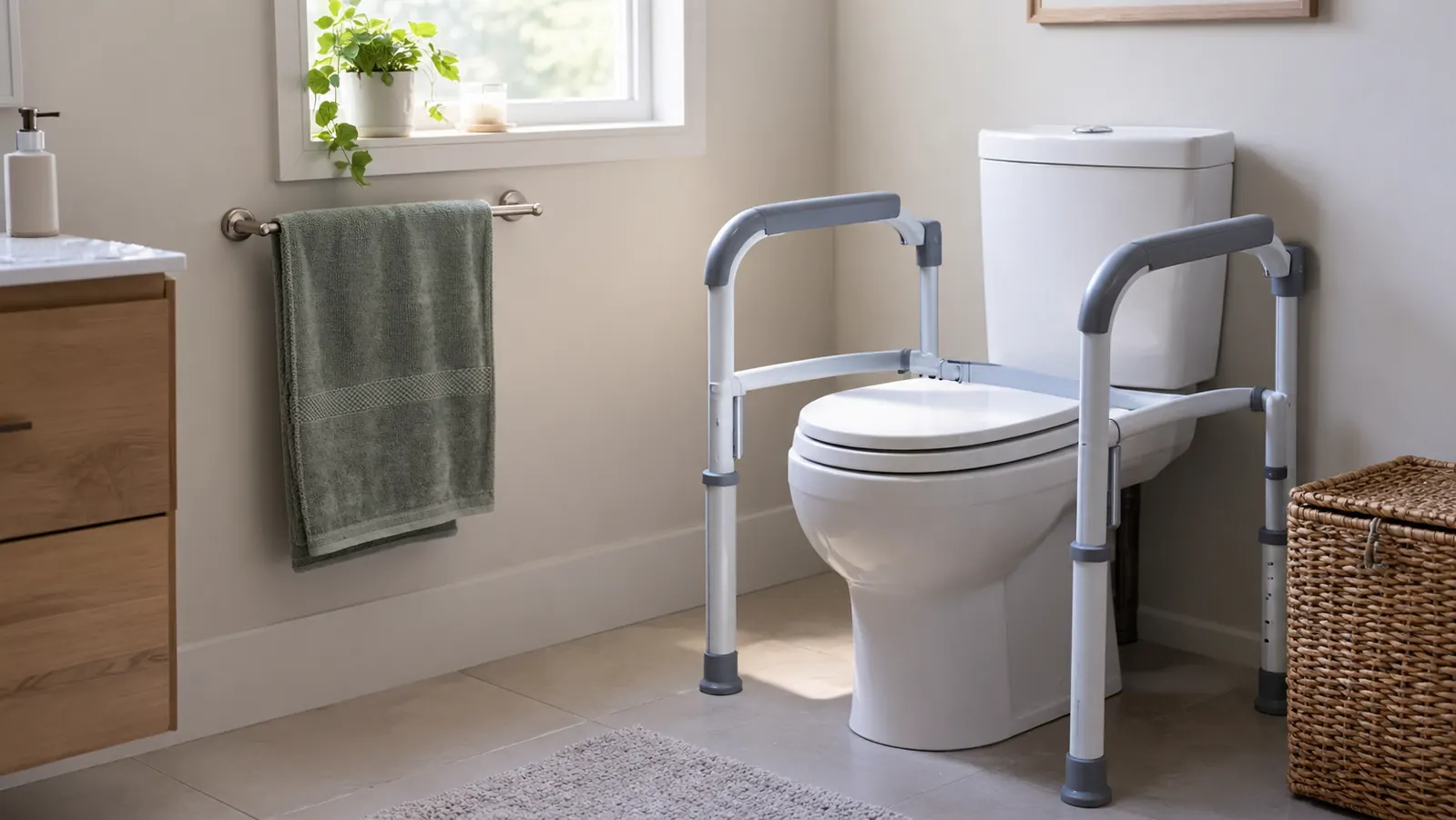
Two winters ago I learned which room in my house was the most dangerous. It wasn't the bathtub, even though that's where I slipped and bruised my hip. It was the toilet. The tub got all the attention because that's where the fall happened, but the toilet is where I found myself every single day, usually at my stiffest, sometimes at two in the morning, and there was nothing to hold onto. The wall was too far to one side. The vanity was the wrong height. The towel rack was out of the question. I made do, the way most people do, by gripping the sink and hoping.
I'm Marjorie Lindqvist, I'm 67, and I live alone in a 1962 split-level outside Hartford. After that fall I spent months making my house safer so I could stay in it. This review is about the Vive Toilet Safety Rail, an adjustable grab bar frame that fits around the base of the toilet. I've had one in my upstairs bathroom for five months, and I use it dozens of times a day. Here is what I wish someone had told me before I ordered it.
The Quick Verdict
A sturdy, adjustable rail that does exactly what it promises. It gives you something solid to hold for every sit and every stand, and after a week of getting used to it, I can't picture my bathroom without it.
Amazon Check Today's Price →The rail that made my middle-of-the-night bathroom trips feel safe
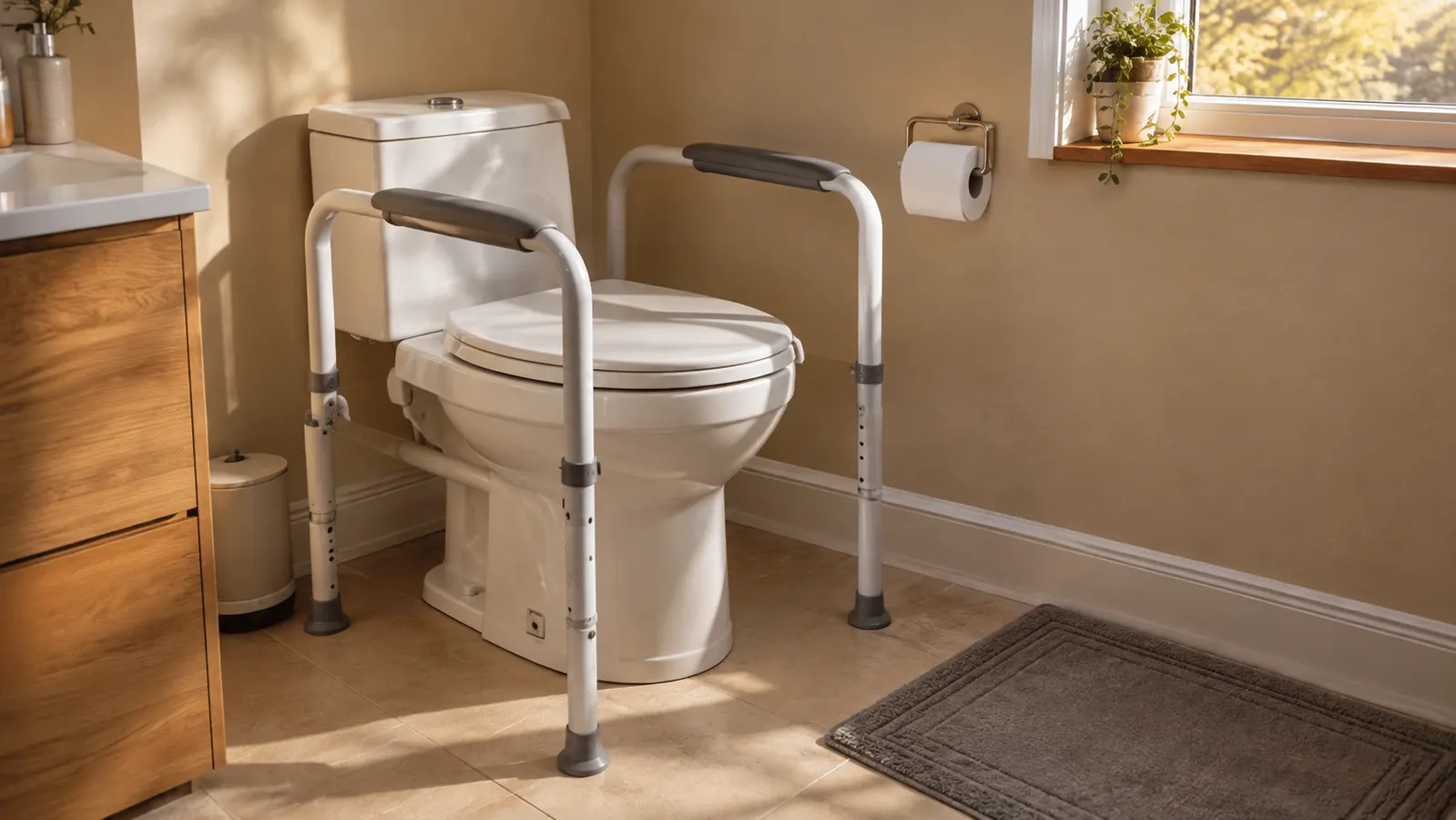
The Vive Toilet Safety Rail fits around the base of your toilet, adjusts to your height, and gives you two solid arms to grip when you sit and stand. No holes in the tile.
Amazon Check Today's Price on Amazon →How I've Used It
The honest reason I bought it: my daughter Kate. When I told her about the bathtub slip, she did that thing where she tries very hard not to sound like a worried daughter. "Mom, she said, you need something to hold onto in there." I told her I was fine. Then I thought about my own mother, who used a walker at the end of her life, and how she used to brace one hand on the wall and one on the vanity whenever she used my bathroom. She never complained about it. She just made do. I ordered the Vive rail the same week.
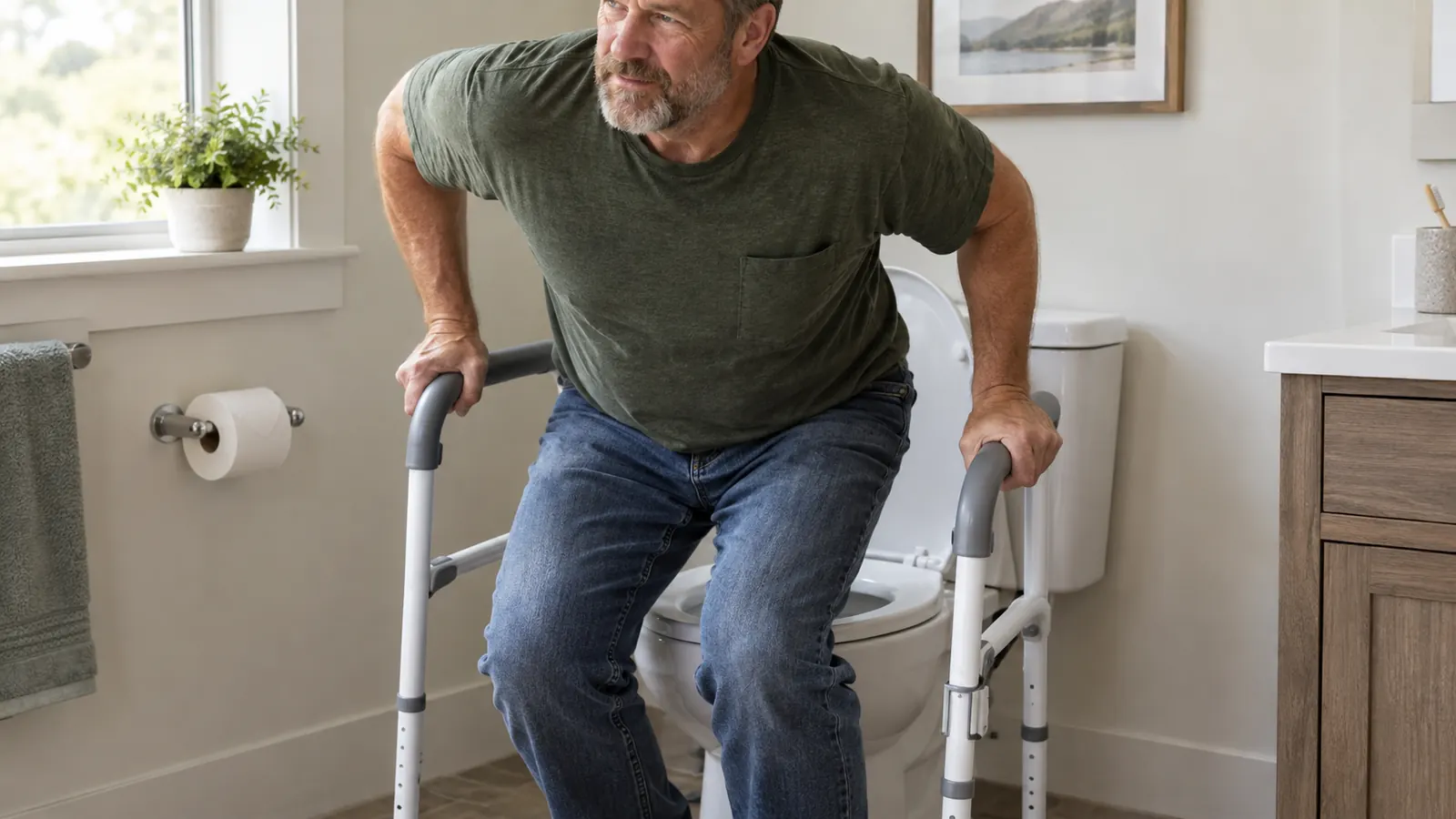
Setup was simpler than I expected. The frame fits around the base of the toilet, and the two arms adjust up and down. I spent the better part of an afternoon getting the height right, which turned out to be the most important part. The arms sit just below my hip bone when I'm standing, so my elbows have a slight bend when I grip them. That bend is what lets my legs do the pushing. If the arms are too high, you hang off them. Too low, and they don't help at the hardest part of the motion.
I've used the rail every time since, day and night. I grip the arms, lower myself down, push back up. My twice-weekly strength class at the senior center taught me sit-to-stand exercises, and this rail is the home version of the same movement. It doesn't do the work for me. It gives my legs something to push against, and that has made all the difference. Five months in, the frame is as solid as the day I set it up. I check the adjustments every couple of weeks, and I've only had to snug them once.
What Nobody Tells You About Setting It Up
The first thing nobody tells you is to measure your bathroom before you order anything. The rail needs room around the base of the toilet, and in my small upstairs bathroom it fits, but it changed the look of the room and the path I walk. I also had to make sure I could still reach the toilet paper. The frame sits on both sides of the toilet, and if you set the arms in the wrong spot, you end up leaning around them. Check the distance before you lock anything in.
The second thing is that the height adjustment takes trial and error, and you won't get it right on the first try. The first evening I set the arms too high. Standing up felt like hoisting myself off a chin-up bar, and sitting down was worse. The next day I set them too low, and they barely helped at the hardest part of the motion. Somewhere in between, after a lot of sitting and standing and a little muttering, I found the setting that felt natural. Give yourself a few days to find yours.
The third thing is the floor. A rail on a slippery floor is only half a solution. I put a rubber-backed bath mat down and I keep the area clear. If your bath mat slides, fix that before you install anything. The rail helps with sitting and standing. It does not help if your feet go out from under you on the way to the toilet. And while I'm on the subject, check your night light. I keep one on in the upstairs hallway and one in the bathroom. Small things, but they matter.
What Nobody Tells You About Using It
There is a learning curve, and nobody mentions it. For the first week, my body kept reaching for the wall out of habit. I would lower myself with one hand on the rail and one hand on the vanity, because my muscles remembered the old way. It took maybe ten days before I stopped reaching for the wall entirely. Now my hands find the rail without thinking, even half asleep at two in the morning.
Use both hands. The rail has two sides for a reason, and using both spreads the load. I also learned to place my hands before I start moving. The scary moment is the transition, when you are halfway down or halfway up, so you want your grip set before you commit. That sounds obvious. It was not obvious to me, and it is the single best piece of advice I can give anyone who just installed one of these.
And the rail does not lift you. I want to be plain about that. It gives you something to push against, but your legs still do the work. I think that is actually the point. Because I kept using my legs, they stayed stronger, and the whole movement got easier over the months. If you cannot push with your legs at all, that is not a rail problem. That is a conversation with your doctor or a physical therapist.
The night trip deserves its own paragraph. That is the one where you are half asleep, stiff, and not thinking about form. I keep a night light on, and the rail is exactly where I expect it to be. I grip, I lower, I stand, I grip, I walk back to bed. It is a small thing until you realize how much steadier the whole journey feels. That peace of mind is the real product.
The Limits Nobody Mentions
Here is the most important thing I can tell you: this rail is for sitting and standing, not for catching a fall. It is a support frame, not a wall-mounted grab bar. A grab bar that is screwed into a stud can take a sudden load if you lose your balance. A toilet safety rail helps you with the controlled motion of sitting down and standing up. If you are worried about falls, if you have already fallen, or if a doctor has mentioned balance, get advice from a professional before you buy anything. They can tell you what your bathroom actually needs.
It also will not fix the rest of the bathroom. A rail does nothing about a wet floor, a missing night light, or a bath mat that slides. I keep the bathroom floor dry, I keep the path clear, and I keep a night light on. The rail is one part of a safer house, not the whole answer. Think of it as a team, and the rail is the player who does one job very well.
And on the small stuff: the frame adds a few corners to wipe when you clean. It is not a big deal, and I would rather you hear it from me than discover it with a sponge in your hand. You also want to check the fit now and then, the way you would check any piece of equipment that gets used hard every day. Thirty seconds once a month, and you are done.
The Alternatives I Considered
Before I settled on the Vive rail, I looked at three other options. The first was a wall-mounted grab bar beside the toilet. A bar screwed into a stud is the gold standard for catching a fall, and if that is your concern, it deserves a serious look. I wanted support on both sides, though, and I did not want to drill into my tile. The second option was a raised toilet seat, which makes the height difference smaller but does not give you anything to hold. The third was a taller frame with a back, the kind you sometimes see in a hospital room. It works, but it takes up a lot of space for a small bathroom.
The Vive rail sits in the middle. It is lower and more compact than a full frame, it does not need holes in the wall, and it gives you two arms instead of one. It will not do what a wall-mounted bar does if you lose your balance, so I want you to hear that from me clearly. But for the specific job of making every sit and stand easier, it has been exactly right for my house.
A quick word on choosing: if the only problem in your bathroom is the getting up and down, a rail like this one is plenty. If you have a real balance problem or a history of falls, start with your doctor or a physical therapist and let them guide you. If you are helping an older parent and they are not steady, that is a different conversation too. The right tool depends on the person, and there is no shame in asking for help figuring it out.
The Part Nobody Talks About
Nobody tells you how it feels to order one of these. There is a small voice that says this is what old people buy, this is giving in. I heard that voice. I ordered it anyway, because I had a better reason than pride. I want to stay in this house. I want to keep walking in the mornings and going to my strength class and having Kate visit on weekends without worrying about me. This rail is a tool for all of that.
And the funny thing is, that voice went quiet fast. The first time I stood up from the toilet without bracing on the vanity, I laughed out loud. My mother never had that. She made do with a wall and a sink because nobody told her there was a better option. I think about her when I use this rail. I tell myself that buying it was me taking care of the woman I'm going to be in ten years. That reframing helped me more than any product feature.
What I Liked
- Sturdy and stable. Five months of daily use, dozens of sits and stands a day, and it has never wobbled.
- Both arms adjust to fit your height and the height of your toilet.
- The compact frame fits in a small bathroom without getting in the way.
- No holes in the wall or the tile, which matters if you rent or if you just do not want to drill.
- The arms give you a comfortable, secure grip for every sit and every stand.
- Setup took me about half an hour, most of that spent on the height.
Where It Falls Short
- There is a real adjustment period. Your body will reach for the wall out of habit for the first week or two.
- It is not a wall-mounted grab bar, and it will not catch a fall.
- You have to check the fit now and then and snug the adjustments.
- The frame adds a few corners to wipe when you clean the bathroom.
- It does not fix a slippery floor, a dark hallway, or a balance problem.
Five months of daily use, including every middle-of-the-night trip, and the rail has never once felt less than solid.
Who This Is For
This rail is for anyone who has ever gripped the edge of the sink and hoped it would hold. It is for people whose knees or hips complain when they stand up from a low toilet. It is for people living alone who want a little backup at two in the morning. It is for renters who cannot drill into tile, and for anyone who wants to keep their independence and is willing to put good equipment in the bathroom to protect it.
If that sounds like you, and especially if you are working with a doctor or a physical therapist after a surgery or an injury, this rail is a reasonable thing to ask them about. It is not medical equipment. It is a sturdy household tool, and it does the job it is built for. I cannot make medical promises and I will not try. I can tell you that it has made my bathroom feel like mine again.
Who Should Skip It
Skip it if you have had recent falls or a balance problem and you have not talked to a doctor or a physical or occupational therapist. This rail helps with sitting and standing. It is not designed to catch you if you lose your balance, and you deserve advice that matches your actual situation, not a product I happen to like.
Skip it if your bathroom is so tight that a frame around the toilet would be in your way, or if you cannot keep the floor clear. And skip it if you are hoping a rail will fix a slippery floor or a dark hallway. It will not. Those are separate projects, and they matter just as much as the rail does.
If you have been gripping the sink and hoping it holds, this is worth a look
The Vive Toilet Safety Rail gives you two solid arms to grip for every sit and every stand. It adjusts to your height, fits around the base of the toilet, and goes in without drilling into the tile. If you have balance concerns, talk to your doctor or a physical therapist first. Then see what this rail can do for your bathroom.
Amazon Check Today's Price on Amazon →